
Shortlisting WPC Wall Panels for Interior Room Design Projects
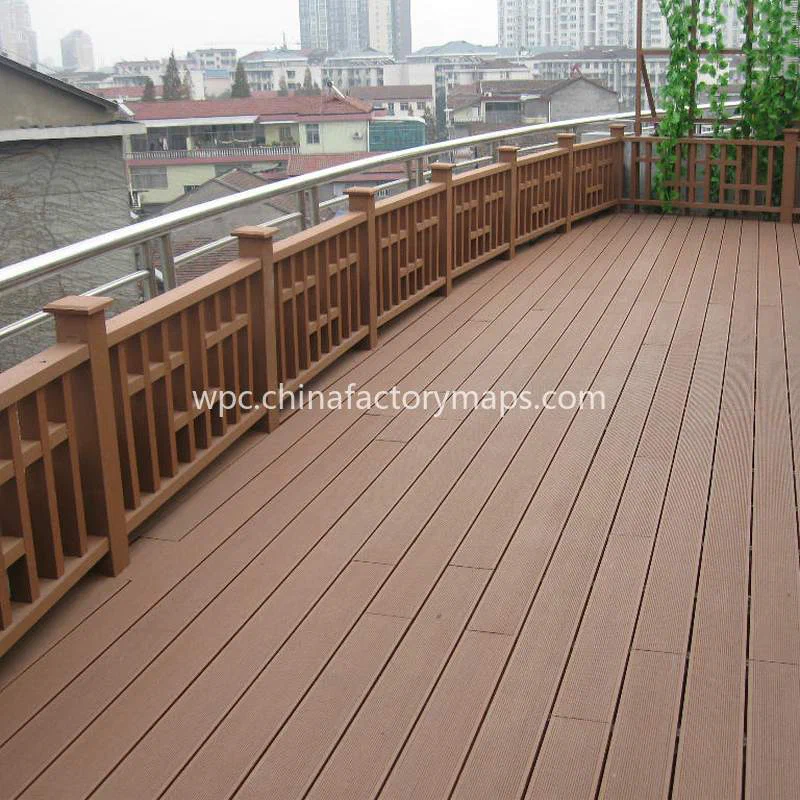
Selecting WPC wall panels for interior room projects starts with matching the product specification to the intended application and narrowing the supplier field to factories that can meet it. Chinafactorymaps.com plots Chinese wood-plastic composite manufacturers by location and distance to export ports, helping buyers organise initial research before requesting samples, technical documents and quotations. Geography provides a practical first filter, but factory capability and product suitability determine which suppliers remain on the shortlist.
Start with the application, then narrow the geography

Interior wall panels serve different purposes across bedrooms, living rooms, offices, hospitality interiors and commercial fit-outs. Before comparing factories, define the required panel profile, surface finish, colour range, dimensions, joining method and installation system. Moisture exposure, cleaning requirements and expected traffic also influence the specification. A decorative panel for a dry living room does not necessarily meet the requirements of a frequently cleaned commercial corridor. Buyers researching wpc panel room design should therefore distinguish appearance-led requirements from performance requirements before contacting manufacturers.
Geography becomes useful once these criteria are established. Chinafactorymaps.com currently plots 49 WPC suppliers across Guangdong, Anhui, Shandong, Zhejiang, Shanghai and Jiangsu. Guangdong has the largest listed group, including factories in Foshan, Guangzhou and Zhuhai. Anhui includes suppliers around Xuancheng, Suzhou and Guangde, while Shandong covers locations including Zibo, Linyi and Qingdao. Zhejiang’s mapped locations include Huzhou, Jiaxing and Hangzhou. Shanghai and Jiangsu, including Nanjing, provide additional points of comparison. These clusters define where to begin searching, not which factory is best. A supplier’s presence in an established manufacturing area does not by itself establish its experience with interior wall panels, export readiness or quality consistency.

Read location as a sourcing signal, not a quality rating
Cluster membership can help buyers frame questions about production specialisation, component sourcing and the range of manufacturers available for comparison. A broader local supplier base may make it easier to investigate alternative panel profiles or related building-material products, although the map alone cannot confirm shared supply chains or production capabilities. Buyers should verify whether a listed factory manufactures WPC wall panels in-house, processes material supplied by another producer, or operates primarily as a trading company. These distinctions affect traceability, customisation and responsibility for defects.
Port distance adds a separate logistical consideration. The directory covers Shanghai Port, Ningbo-Zhoushan Port, Shenzhen Port, Qingdao Port, Guangzhou Port, Tianjin Port, Xiamen Port, Taicang Port, Beibu Gulf Port, Rizhao Port, Lianyungang Port and Yingkou Port. A mapped factory’s proximity to a port can help identify candidates for an initial freight comparison, but straight-line distance is not a delivered-cost estimate. Road access, inland transport arrangements, cargo consolidation, export handling and the destination route all affect the final calculation. Buyers should compare factory-gate terms and freight quotations on the same shipment assumptions rather than selecting a supplier solely because its pin appears closer to a port.
Vet the product and the production process
After reducing the geographic field, request evidence specific to the proposed wall panel. Samples should represent the actual production finish, not just a showroom variant. Check colour uniformity, surface texture, edge quality, dimensional tolerances, joint fit and visible defects. Confirm the panel’s composition, profile dimensions, weight, fixing method and compatibility with the specified supporting structure. If the project requires particular fire-performance or emissions documentation, establish the applicable standard and request test reports that match the exact product construction and intended use. Generic company certificates do not establish that every panel meets the project’s requirements.

WPC combines wood-based material with polymers and additives, so performance depends on formulation and manufacturing control. Panels can respond to temperature changes through expansion and contraction; installation details must allow for movement where required. The supporting structure also needs suitable ventilation and installation clearances according to the manufacturer’s instructions and the room conditions. WPC can resist moisture and insect damage better than untreated wood in many applications, but it is not indestructible or automatically suitable for every wet area. Sustained ultraviolet exposure can fade colours, particularly where panels receive strong sunlight. Ask suppliers for relevant test evidence, cleaning guidance and installation instructions instead of relying on broad product descriptions.
Commercial checks should follow the technical review. Confirm whether the factory can maintain the selected finish across repeat orders, manage colour variation between batches and package panels to reduce edge damage during transport. Clarify sample lead time, production scheduling, custom-profile capability, order quantities, inspection arrangements, spare-panel provision and procedures for handling nonconforming goods. Request a written quotation based on the same specification and delivery terms from each shortlisted supplier. The map directory supports this workflow by helping buyers identify and group potential factories by region and port proximity; direct supplier verification remains necessary before a purchasing decision.

FAQ
Q: Does a factory’s location indicate that it is a suitable WPC wall panel supplier?
A: No. Location helps narrow the search and assess logistics, but buyers must verify the factory’s product range, manufacturing role, technical documentation and ability to meet project requirements.
Q: How should buyers compare factories located near different export ports?
A: Compare inland transport, export handling, shipping routes and quoted delivery terms for the same cargo and destination. Port proximity is a useful screening factor, not a substitute for a complete freight comparison.
KEYWORDS:: China WPC interior wall panel manufacturers, WPC wall panel factory export ports, interior decorative composite wall panel suppliers
Featured Suppliers
Verified premium suppliers on our map.
