
Solid vs. Hollow Composite Tiles: Materials and Construction
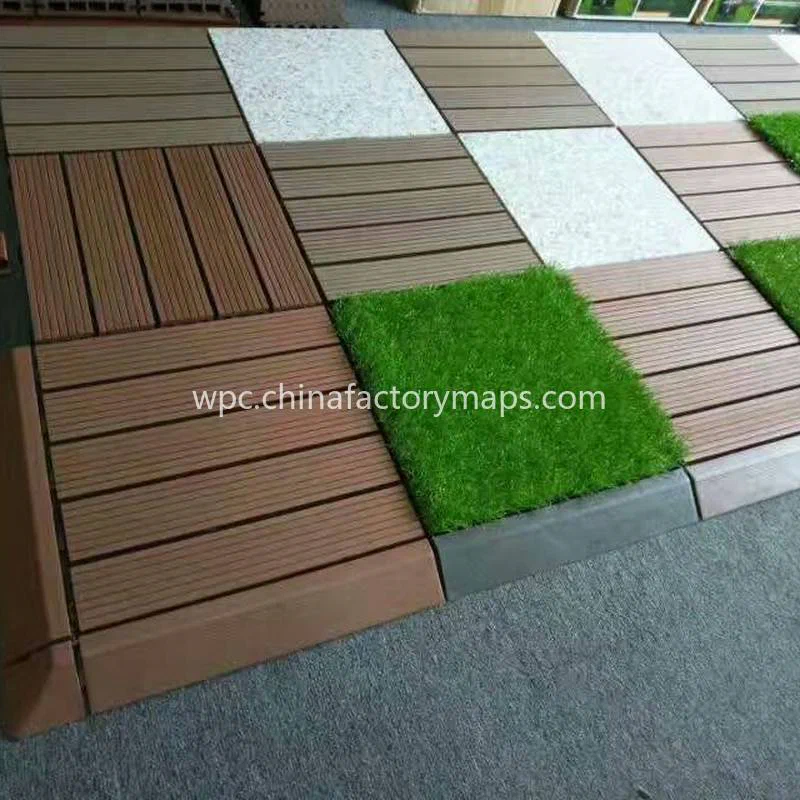
Solid and hollow WPC tiles differ in their internal structure, material distribution and response to mechanical loads. For buyers sourcing a composite tile for balconies, terraces, pool surrounds or other outdoor surfaces, these differences affect support requirements, fastening methods and long-term performance. Comparing construction details alongside supplier location helps clarify which specifications suit the intended installation.
Solid tiles contain material throughout their cross-section, while hollow tiles have internal cavities formed during extrusion or moulding. A solid profile generally provides more material around fixing points and can better tolerate concentrated loads, depending on its formulation and dimensions. However, greater material content also increases weight and material consumption. Hollow profiles use less material for a comparable external size and may reduce handling weight, but their performance depends on wall thickness, internal rib design and the spacing of supporting members. Neither structure guarantees a particular load capacity. Buyers should request test data relevant to the actual tile dimensions and installation conditions rather than comparing products by appearance alone.
The intended surface determines which construction deserves closer evaluation. Solid tiles may suit areas where edges, corners or fixing zones experience repeated contact, provided the supporting structure can carry the additional weight. Hollow tiles can be practical for modular outdoor flooring where lower weight and efficient material use matter, especially when the underside is properly supported. Around pools, neither construction should be assumed slip-resistant simply because it contains wood fibre or plastic. Surface texture, drainage design and wet-condition test results are more relevant. For balconies and terraces, the complete assembly also matters: drainage paths, ventilation beneath the tiles and access for cleaning can influence performance as much as the tile profile itself.
Both types are commonly made from a blend of wood flour or fibre, thermoplastic resin and additives. The proportions, polymer type, processing conditions and quality of dispersion influence stiffness, impact behaviour and moisture response. Wood-plastic composite resists moisture and insect damage better than untreated wood in many outdoor applications, but it is not indestructible or completely impervious to water-related problems. Water can collect in poorly drained cavities or beneath a tile installation, while dirt and organic deposits can accumulate around joints. Solid construction does not eliminate these risks. Hollow construction does not automatically create them either; the outcome depends on drainage, exposure and the details of the installation. Buyers should establish whether the product is intended for ground-level use, elevated decking or a specific modular flooring system.

Thermal movement requires particular attention in both designs. WPC expands and contracts as temperatures change, and the amount of movement depends on the polymer, formulation, profile length and temperature range. Installations therefore need the manufacturer’s specified gaps at joints and perimeters, along with a ventilated substructure that allows water to drain and air to circulate. Hollow profiles may respond differently from solid profiles because their wall geometry and internal ribs affect heat distribution and stiffness, but the word “hollow” alone does not predict expansion. Fasteners and connectors must suit the tile design and allow movement where the system requires it. Rigidly restraining a tile or omitting expansion gaps can contribute to buckling, joint pressure or distortion. Sustained ultraviolet exposure can also fade colour, so buyers should check weathering data and understand the limits of any UV-resistant formulation or surface cap.

Supplier geography provides another useful screening factor for overseas procurement. Chinafactorymaps.com plots WPC factories across Guangdong, Anhui, Shandong, Zhejiang, Shanghai and Jiangsu, allowing buyers to compare mapped locations with export-port access. Guangdong listings include Foshan, Guangzhou and Zhuhai; other mapped clusters include Xuancheng, Suzhou, Guangde, Zibo, Linyi, Qingdao, Huzhou, Jiaxing, Hangzhou and Nanjing. Relevant ports include Shenzhen Port, Guangzhou Port, Shanghai Port, Ningbo-Zhoushan Port and Qingdao Port. Geographic proximity can help narrow a sourcing shortlist, but it does not establish product quality or guarantee the lowest freight cost. Before requesting quotations, buyers should compare drawings, dimensions, wall thickness where applicable, load-test results, colour-weathering information, fastening details and packaging requirements. Samples should be assessed with the proposed support system, not in isolation.

FAQ
Q: Are solid WPC tiles always stronger than hollow tiles?
A: Not necessarily. Strength depends on the material formulation, profile geometry, dimensions, support spacing and tested load performance, so buyers should compare technical data for the intended application.
Q: Do hollow WPC tiles require expansion gaps and ventilation?
A: Yes. Hollow tiles still expand and contract with temperature and need suitable joint clearances, drainage and a ventilated substructure according to the manufacturer’s installation instructions.
Featured Suppliers
Verified premium suppliers on our map.
