
Sourcing Wood Plastic Composite Cladding: Checks Before Sampling
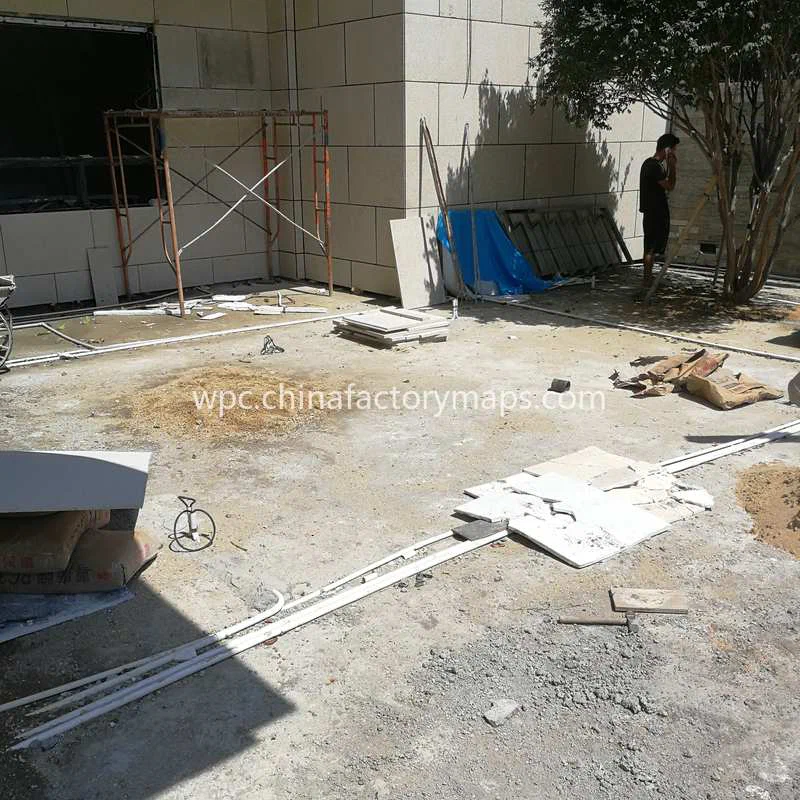
Sourcing wood plastic composite cladding from China requires more than comparing board profiles and catalogue specifications. Overseas buyers should verify the manufacturer’s production capabilities, material formulation, dimensional consistency and export arrangements before requesting samples. Factory location also matters, particularly when the finished goods must move through a suitable export port.
Verify the Product Before Comparing Suppliers
The first step is to establish exactly what type of cladding is required. WPC products vary in their wood-fibre and polymer composition, surface treatment, internal structure and manufacturing process. These differences affect weight, stiffness, surface appearance and performance outdoors. Two boards with similar dimensions and colours may have different material properties.

Ask each supplier for a technical specification covering the following points:
- Wood-fibre and polymer composition, including whether recycled material is used.
- Board dimensions, wall thickness and dimensional tolerances.
- Solid or hollow internal construction.
- Surface finish, embossing and colour options.
- Expected expansion and contraction with temperature changes.
- Recommended fixing method and supporting substructure.
- Installation gaps, ventilation requirements and drainage arrangements.
Material composition deserves particular attention. Some manufacturers use different formulations across product ranges, even when the boards look similar. A sample should therefore be linked to a specific product specification rather than treated as a general representation of the factory’s entire output.
Colour stability also needs examination. WPC can fade under sustained ultraviolet exposure, and the degree of change depends on the formulation and surface treatment. Ask how the supplier evaluates outdoor exposure and whether sample boards represent the production finish.
Distinguish Manufacturers from Trading Companies
A supplier’s business description does not establish that it operates a factory. Trading companies can provide useful sourcing services, but buyers need to understand who actually manufactures the boards and who controls quality during production.
Request the factory’s registered business details, production address and recent manufacturing photographs. These should be consistent with the supplier’s stated location. A video inspection can provide additional evidence, particularly when it shows raw-material storage, mixing equipment, extrusion lines, cooling systems, cutting stations and finished-goods storage.
The production process matters. A genuine manufacturer should be able to explain how material batches are prepared, how extrusion settings are controlled and how finished boards are checked. Ask who handles formulation changes and whether the factory can reproduce an agreed specification across repeat orders.
Several questions help establish the commercial relationship:

- Does the supplier own or directly operate the extrusion equipment?
- Which production stages are completed at its own facility?
- Are any processes outsourced to another factory?
- Who performs dimensional and appearance inspections?
- Can the supplier provide production records linked to a specific order?
- Who is responsible if delivered goods differ from the approved sample?
A trading company may answer these questions clearly and arrange inspections through its manufacturing partners. That is not automatically a disadvantage. The important distinction is transparency. Buyers should know which legal entity receives payment, which facility produces the goods and which party accepts responsibility for defects.
Compare Factory Locations and Export Routes
China’s mapped WPC supplier base is geographically distributed rather than concentrated in one manufacturing centre. The current directory plots 49 suppliers across six provinces and municipalities, allowing buyers to compare factory locations with nearby export infrastructure.
Guangdong has the largest listed cluster, with 22 suppliers, including factories in Foshan, Guangzhou and Zhuhai. Its geographic position makes the province relevant to buyers comparing access to Shenzhen Port and Guangzhou Port. Anhui has nine listed suppliers, including Xuancheng, Suzhou and Guangde. Shandong accounts for seven, including Zibo, Linyi and Qingdao, while Zhejiang has six, including Huzhou, Jiaxing and Hangzhou.
Shanghai has three mapped suppliers, and Jiangsu has two, including Nanjing. These locations provide different logistical starting points for export planning. Shanghai Port, Ningbo-Zhoushan Port, Qingdao Port and Taicang Port are among the ports buyers can consider when assessing shipment routes.
The nearest port is not necessarily the most economical shipping option. Inland transport arrangements, container availability, shipping schedules and the destination market all affect the final logistics calculation. A factory located relatively close to a port may still quote a less competitive delivered cost if its inland transport arrangements are inefficient.
Use the directory map to shortlist suppliers by geographic position, then request a specific shipping quotation from each candidate. The quotation should identify the loading port, inland transport responsibility, packaging arrangement and shipment terms. Comparing factory-gate prices alone can conceal significant differences in the cost of getting goods to the destination.
Sampling, Inspection and Common Production Risks
A sample should answer technical questions, not simply demonstrate appearance. Request representative boards from the intended production line and confirm their dimensions, surface finish, colour and internal structure. Where possible, obtain samples from more than one production batch to assess consistency.
Inspect the cut ends and internal sections. Hollow boards should have consistent cavity geometry and wall thickness, while solid profiles should not show obvious voids or irregularities. Check for surface bubbles, cracks, uneven embossing, warped edges and inconsistent colour. Measurements should be taken at several points rather than relying on a single reading.
Installation performance requires separate attention. WPC expands and contracts as temperatures change. Boards therefore need appropriate gaps, compatible fixing arrangements and a ventilated supporting structure. Poor installation guidance can lead to buckling, movement or premature deterioration, even when the material itself meets the agreed specification.
Moisture and insect resistance are advantages of WPC, but the material is not indestructible. Prolonged exposure, unsuitable installation details and poor drainage can still contribute to problems. Ask the supplier about recommended cleaning methods, exposure limitations and replacement procedures for damaged sections.
Before approving a sample, agree on an inspection checklist that can also be applied to bulk production. It should cover dimensions, colour tolerance, surface defects, packaging and product identification. A pre-shipment inspection should compare finished goods against the approved sample and written specification. Photographs alone are insufficient when dimensional accuracy or internal construction is in question.
From Sample Approval to a Purchase Order
The final sourcing decision should consider production control and order management as well as the sample itself. A supplier may produce an acceptable prototype but struggle to maintain the same appearance and dimensions across a large batch. Buyers should establish whether the proposed factory has sufficient extrusion capacity and whether its production schedule can accommodate the required quantity.
The purchase agreement should identify the exact product profile, material specification, colour reference, dimensions, tolerances, packaging requirements and inspection criteria. Any agreed changes should be documented before production begins. Avoid relying on catalogue descriptions or informal messages as the only record of product requirements.
Packaging deserves attention because long cladding boards can be damaged during handling and transportation. Confirm bundle dimensions, protective wrapping, edge protection, pallet arrangements and container-loading methods. Ask whether packaging is suitable for the expected handling conditions and whether individual bundles carry product identification.
Payment arrangements should correspond to identifiable production milestones. Buyers should also clarify the procedure for handling rejected goods, shortages and manufacturing defects. Responsibility for inspection costs and corrective action needs to be agreed before the order is placed.
For overseas buyers comparing Chinese factories, the strongest shortlist is one supported by verifiable manufacturing information, repeatable sample quality and a realistic export route. Geographic proximity can narrow the search, but production evidence and clear contractual responsibilities should determine the final supplier selection.
FAQ
Q: How can buyers confirm that a Chinese WPC supplier is a real manufacturer?
A: Request its registered business details, factory address and evidence of extrusion equipment and production operations. A factory inspection or live video walkthrough can help verify whether manufacturing takes place at the stated facility.
Q: What should be checked when evaluating WPC cladding samples?
A: Check dimensions, wall thickness, internal construction, colour consistency and surface defects. Also request installation guidance covering thermal expansion, fixing methods and ventilation.
Q: Does choosing a factory near an export port always reduce shipping costs?
A: No. Inland transport, container availability, shipping schedules and destination routes all influence the total logistics cost. Compare complete shipping quotations rather than distance alone.
Related Articles
Featured Suppliers
Verified premium suppliers on our map.
