
Tongue-and-Groove WPC Panels Versus Overlapping Wall Profiles
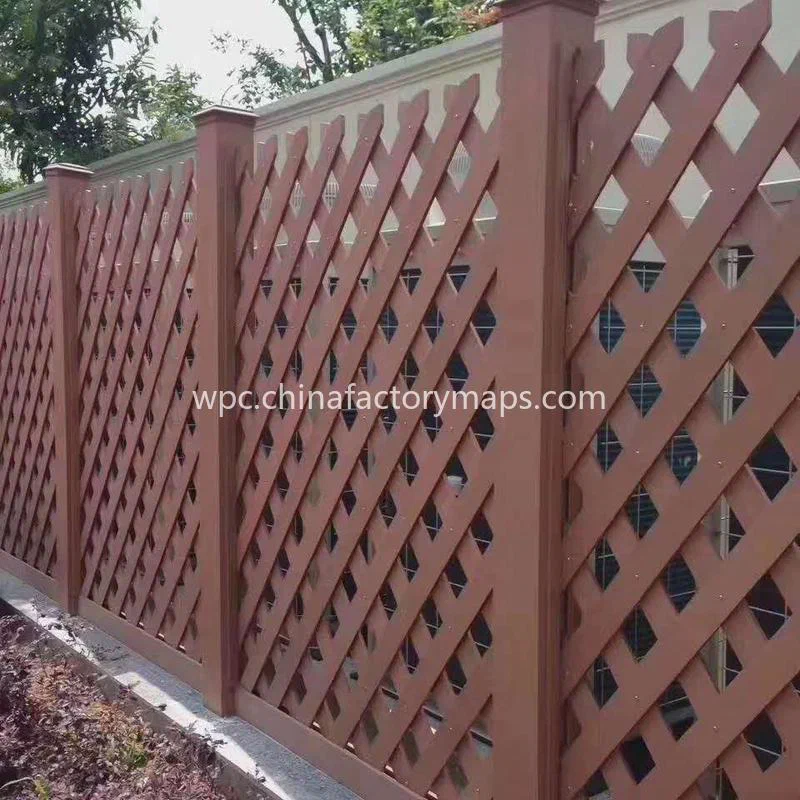
Tongue-and-groove WPC panels and overlapping wall profiles differ mainly in how their edges meet, manage water, and accommodate movement. For buyers sourcing wood-plastic composite cladding, the profile affects installation, joint appearance, fastening requirements, and performance on exposed walls. Comparing these details helps match the panel design to the building and its exposure conditions.
Tongue-and-groove panels use a projecting tongue on one edge and a matching groove on the other. The joint aligns adjacent boards and conceals much of the fixing hardware, producing a relatively continuous surface. Depending on the manufacturer’s design, installation may use clips, screws through designated fixing points, or other specified fasteners. The joint can limit direct exposure of the seam, but it should not be treated as a fully sealed waterproof connection. Panel dimensions, machining tolerances, and installation accuracy all affect the finished result. Buyers evaluating wpc paneele nut und feder should confirm the actual joint geometry, usable coverage width, and compatible fixing method rather than relying on product terminology alone. A tightly fitted joint also needs sufficient allowance for expansion and contraction. WPC contains polymer, which responds to temperature changes, while reinforcement, filler content, board dimensions, and formulation influence the extent of movement.

Overlapping profiles use an exposed or partially concealed lap, with one panel covering part of the next. This arrangement creates a visible shadow line and can give a wall a more pronounced horizontal rhythm. The overlap may help shed rain when installed in the specified orientation, but drainage depends on the profile shape, joint direction, detailing, and exposure. Water can still enter around ends, corners, penetrations, and poorly designed connections. Overlapping panels may also make individual boards easier to remove where the fixing arrangement allows access, although this is not guaranteed by the profile alone. The trade-off is a different surface appearance and potentially different requirements for board coverage, fastening access, and installation sequence. Buyers should request section drawings showing the lap depth and the finished coverage per panel. Nominal board width is not the same as installed coverage, and this distinction affects material take-off and shipping-volume calculations.

Both profiles use the same underlying WPC material principles. The composite can resist moisture absorption and insect damage better than untreated timber in many applications, but it is not indestructible or absolutely waterproof. Prolonged wetting, trapped moisture, unsuitable detailing, or water entering through unprotected joints can still cause problems in the surrounding assembly. A ventilated substructure and drainage path are important, particularly for exterior cladding. Installers must follow the specified gaps at board ends and between components, allow for temperature-related movement, and avoid fastening methods that unintentionally restrain the panels. Sustained ultraviolet exposure can fade colour over time, with the degree of change depending on formulation, pigments, surface treatment, and exposure. When comparing suppliers, buyers should request technical data on thermal movement, recommended support spacing, fixing details, exterior-use limitations, and applicable test reports. Samples viewed indoors may not accurately represent long-term outdoor colour performance.
For sourcing, profile selection should be evaluated alongside production consistency and export logistics. China’s mapped WPC supplier clusters include Guangdong, Anhui, Shandong, Zhejiang, Shanghai, and Jiangsu, with listed suppliers concentrated in Guangdong. Buyers can use a geographic directory to compare factory locations and distance to relevant export ports, including Shenzhen Port, Guangzhou Port, Shanghai Port, Ningbo-Zhoushan Port, and Qingdao Port. Proximity is a useful screening factor, not a guarantee of lower freight cost or faster delivery; cargo routing, inland transport, consolidation, and shipping schedules also matter. During supplier qualification, request drawings for the exact profile, installation instructions, sample pieces, packaging dimensions, and confirmation that production batches maintain consistent joint dimensions. For tongue-and-groove panels, inspect engagement and alignment; for overlapping profiles, check lap consistency and edge finish. Both designs should be assessed for the intended wall assembly, local climate, and maintenance expectations before a bulk order is placed.

FAQ
Q: Are tongue-and-groove WPC panels waterproof?
A: No. The joint can reduce direct exposure to rain, but it does not guarantee a waterproof wall. Drainage, ventilation, flashing, and correct installation remain necessary.
Q: Which WPC wall profile is easier to install?
A: Tongue-and-groove panels help align adjoining boards, while overlapping profiles may offer more visible joint references during installation. Actual difficulty depends on the fixing system, substrate, panel tolerances, and access requirements.
Q: What should buyers check before ordering WPC wall panels from China?
A: Confirm the profile drawings, effective coverage width, thermal expansion allowances, fastening details, exterior performance data, packaging specifications, and factory location relative to the intended export port.
KEYWORDS:: tongue and groove wpc wall panels, overlapping wpc cladding profiles, china wpc wall panel suppliers
Featured Suppliers
Verified premium suppliers on our map.
