
Two-Tone Composite Decking Trends Reflect Changing Export Needs
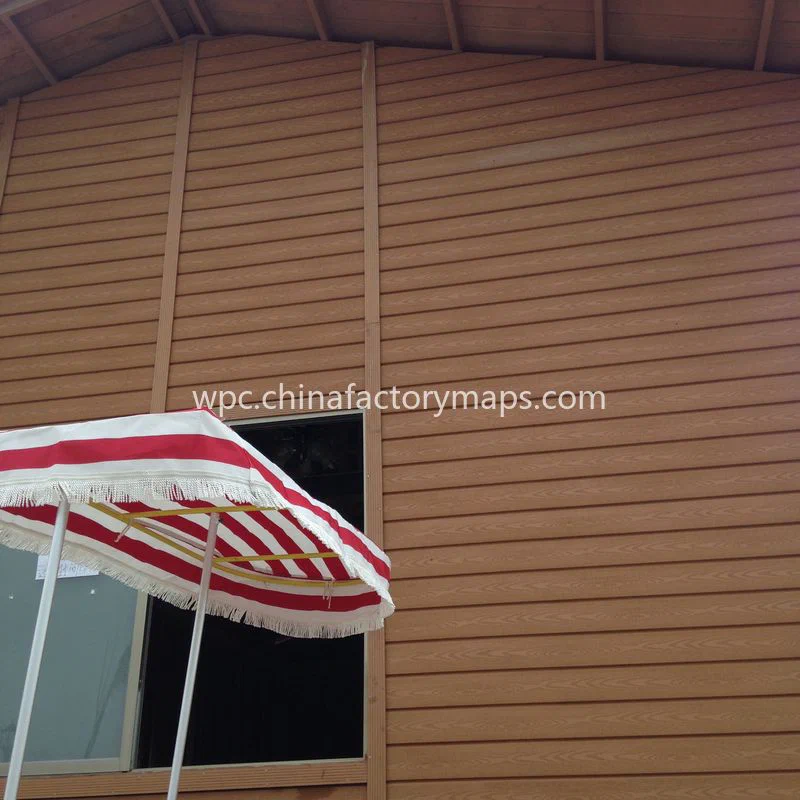
Two-tone composite decking is becoming a more considered product choice for buyers evaluating Chinese WPC suppliers, with colour contrast increasingly tied to project design, installation requirements and export specifications. For overseas importers, the shift affects how decking ranges are developed, how samples are assessed and which manufacturing locations make practical sense for procurement. ChinaFactoryMaps.com maps WPC factories by location and distance to export ports, helping buyers compare sourcing options without favouring any single manufacturer.
Why two-tone decking is gaining attention
Two-tone boards offer a way to create visual variation without combining separate materials across an entire deck. Contrasting shades can define board edges, distinguish walking areas from borders or introduce a more natural variation across a large outdoor surface. For distributors, this creates opportunities to serve residential landscaping, hospitality, garden and commercial outdoor projects with a recognisable design feature. The sourcing implication is that colour is no longer simply a catalogue detail. Buyers may need to evaluate colour consistency across production batches, the appearance of the board surface and how different shades work together under natural light. These considerations become more important when importing for projects that require repeat orders or a consistent product range across multiple locations.
The term two tone composite deck ideas covers several different approaches, and buyers should distinguish them before requesting samples. Some boards use contrasting colours within one profile, while others achieve variation through surface patterns, streaking or different shades across the board face. Co-extruded products may use a protective outer layer over a composite core, but a two-tone appearance alone does not confirm that a board is co-extruded. The construction method affects product performance, manufacturing complexity and specification requirements. Importers should ask suppliers to identify the production method, surface treatment and available profile options rather than relying on product photography. A sample viewed outdoors is more informative than a digitally rendered colour chart, particularly when the intended application involves strong sunlight.
What changing product expectations mean for sourcing

Chinese WPC manufacturing is spread across several provincial clusters, giving buyers a geographic starting point for comparing suppliers. Guangdong has the largest listed group on ChinaFactoryMaps.com, including factories in Foshan, Guangzhou and Zhuhai. Anhui includes suppliers in Xuancheng, Suzhou and Guangde, while Shandong’s mapped locations include Zibo, Linyi and Qingdao. Zhejiang covers Huzhou, Jiaxing and Hangzhou; the directory also maps suppliers in Shanghai and Jiangsu, including Nanjing. These locations provide a framework for identifying potential manufacturing partners, not a guarantee that every factory offers two-tone boards or the same production capabilities. Buyers should verify each supplier’s current product range, tooling options and ability to maintain a specified colour combination. A mapped location narrows the search, but technical confirmation still determines suitability.
Product selection also needs to account for the difference between visual appeal and long-term outdoor performance. WPC combines wood-based material with polymers and additives, so its behaviour depends on formulation, profile design and manufacturing quality. It generally resists moisture-related deterioration and insect damage better than untreated timber, but it is not indestructible or completely waterproof in every installation condition. Sustained ultraviolet exposure can fade colours, and temperature changes cause boards to expand and contract. For two-tone products, these effects matter because fading may alter the contrast that defines the original design. Buyers should request available weathering information, maintenance instructions and guidance on the expected appearance of the surface over time. Claims about colour stability should be supported by product-specific evidence rather than inferred from the initial sample.
Export requirements introduce another set of trade-offs. A supplier may offer a visually suitable board but still require adjustments to packaging, board length, profile dimensions or labelling to meet the buyer’s distribution model. Longer boards can create handling and freight-planning considerations, while mixed-colour orders may require closer control of production scheduling and batch identification. Importers should establish whether contrasting shades are produced within one board, supplied as separate board colours or offered through different surface finishes. That distinction affects inventory planning and the risk of receiving components that do not match the intended layout. Before confirming an order, buyers should align the approved sample with the written specification, including colour references, dimensions, tolerances, packaging and the procedure for addressing visible defects.

Factory location and port access
Geography matters because export logistics influence the practical cost and timing of sourcing, even when the product specification remains unchanged. ChinaFactoryMaps.com plots mapped WPC factories against major export ports, including Shanghai Port, Ningbo-Zhoushan Port, Shenzhen Port, Qingdao Port and Guangzhou Port. Other covered gateways include Tianjin Port, Xiamen Port, Taicang Port, Beibu Gulf Port, Rizhao Port, Lianyungang Port and Yingkou Port. The nearest port on a map is a useful screening factor, but it does not establish the final shipping route or total freight cost. Inland transport, factory dispatch arrangements, container availability and the destination market all affect the logistics calculation. Buyers should compare realistic factory-to-port arrangements for shortlisted suppliers rather than selecting a manufacturer solely because its mapped location appears close to a major terminal.

A disciplined sourcing process links design approval to production capability and logistics from the outset. Buyers can begin by filtering the directory by province or distance to an export port, then contact suitable factories to confirm whether the required two-tone construction is available. Sample evaluation should cover colour contrast, surface texture, edge finish and the consistency of the board profile. Technical review should address thermal movement, recommended gaps, ventilation beneath the deck and the fastening system specified by the manufacturer. Installation details matter because composite boards need suitable spacing and a ventilated substructure to accommodate movement and moisture management. Before placing a repeat order, importers should also establish how colour batches are identified and whether replacement boards can be matched later. These checks help separate a promising catalogue option from a product that fits the requirements of an export programme.
FAQ
Q: What should buyers check when sourcing two-tone composite decking from China?
A: Confirm the board construction, colour consistency, profile dimensions, outdoor performance information and installation instructions. Compare approved samples with the written specification before production begins.
Q: Does two-tone composite decking always use co-extrusion?
A: No. Two-tone effects can come from different manufacturing methods, surface patterns or colour arrangements. Buyers should ask the factory to confirm the construction of the specific product being quoted.
Q: How can buyers compare Chinese WPC factories by export access?
A: Use ChinaFactoryMaps.com to compare mapped supplier locations with covered export ports, then verify inland transport arrangements, shipping routes and dispatch conditions directly with each shortlisted factory.
Related Articles
Featured Suppliers
Verified premium suppliers on our map.
