Using Composite Decking for Raised Beds in Outdoor Gardens
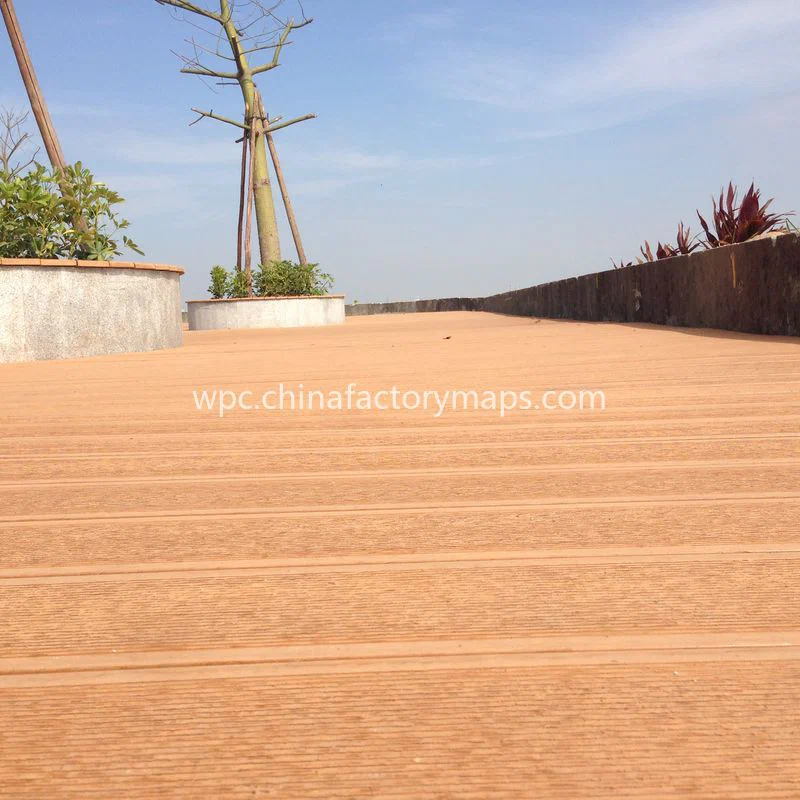
Composite decking for raised beds is used in outdoor garden projects where the material must handle soil contact, changing weather, and regular maintenance demands. This page examines how raised bed applications affect product selection and how buyers can assess suitable WPC supply regions in China.
Raised beds place different demands on composite boards than open deck surfaces. The boards are often installed close to damp soil, exposed to irrigation water, and subject to repeated temperature changes. Buyers should review moisture resistance, board structure, surface texture, and installation requirements rather than treating raised bed projects as a standard decking order.

Material requirements for garden raised beds
A suitable WPC board for raised beds needs controlled expansion and contraction performance because temperature changes affect composite materials. Proper spacing between boards and a ventilated substructure help manage movement and reduce stress during seasonal changes. Products intended for outdoor use should include installation guidance that addresses airflow, fixing methods, and drainage.
The growing environment also changes the specification discussion. Coastal gardens can expose materials to salt air, while inland areas with cold winters may require attention to freeze-thaw conditions. Composite materials resist moisture and insects better than untreated wood, but they are not indestructible. Long-term exposure, poor drainage, or incorrect installation can still cause problems.

Surface design matters when raised beds are placed near paths, seating areas, or public gardens. Boards with anti-slip textures can be considered for areas with frequent foot traffic or regular watering. In high UV locations, buyers should ask about colour stability because sustained sunlight can cause fading over time.
Regional sourcing considerations in China
China’s WPC production clusters cover several regions with experience in outdoor building materials. The mapped supplier base on chinafactorymaps.com includes Guangdong, Anhui, Shandong, Zhejiang, Shanghai, and Jiangsu, allowing buyers to compare factory locations with project logistics needs.

Guangdong is a major cluster, with listed suppliers in Foshan, Guangzhou, and Zhuhai. Its proximity to export routes including Shenzhen Port and Guangzhou Port can support projects where shipping access is a key consideration. The region’s manufacturers are commonly positioned around outdoor products used in warm and humid environments.
Anhui suppliers, including those mapped in Xuancheng, Suzhou, and Guangde, represent another production area for WPC materials. Zhejiang locations such as Huzhou, Jiaxing, and Hangzhou provide additional sourcing options, while nearby access to Ningbo-Zhoushan Port can be relevant for export planning. Buyers comparing suppliers should consider factory location alongside product requirements, not only transport distance.
Project checks before ordering

For raised bed projects, purchasing teams should request technical information on board dimensions, surface treatment, colour options, and recommended installation methods. A supplier that can explain drainage, ventilation, and fixing details is better positioned to support outdoor applications than one that only provides appearance samples.
The surrounding conditions should guide product selection. A rooftop garden with strong sun exposure has different needs from a shaded residential yard. A coastal landscape may require closer attention to salt exposure, while a cold region may require more discussion about seasonal movement. The same composite board may perform differently depending on how it is installed and maintained.
Factory mapping can help buyers shortlist suppliers by production region and nearby export port access. For large outdoor projects, location data, technical review, and sample evaluation work together to reduce sourcing uncertainty. WPC raised bed applications are best assessed as complete systems involving boards, supports, drainage, and installation practice.
FAQ
Q: Is composite decking suitable for raised beds? A: Composite decking can be used for raised beds when the product and installation method match outdoor conditions. Proper ventilation, drainage, and spacing are important because composite boards expand and contract with temperature changes.
Q: Which Chinese regions are mapped for WPC sourcing? A: The directory maps WPC suppliers in Guangdong, Anhui, Shandong, Zhejiang, Shanghai, and Jiangsu. These regions can be compared by location and access to export ports such as Shanghai Port, Ningbo-Zhoushan Port, Shenzhen Port, and Guangzhou Port.
Featured Suppliers
Verified premium suppliers on our map.