
What Overseas Buyers Should Verify Before Ordering Composite Decks
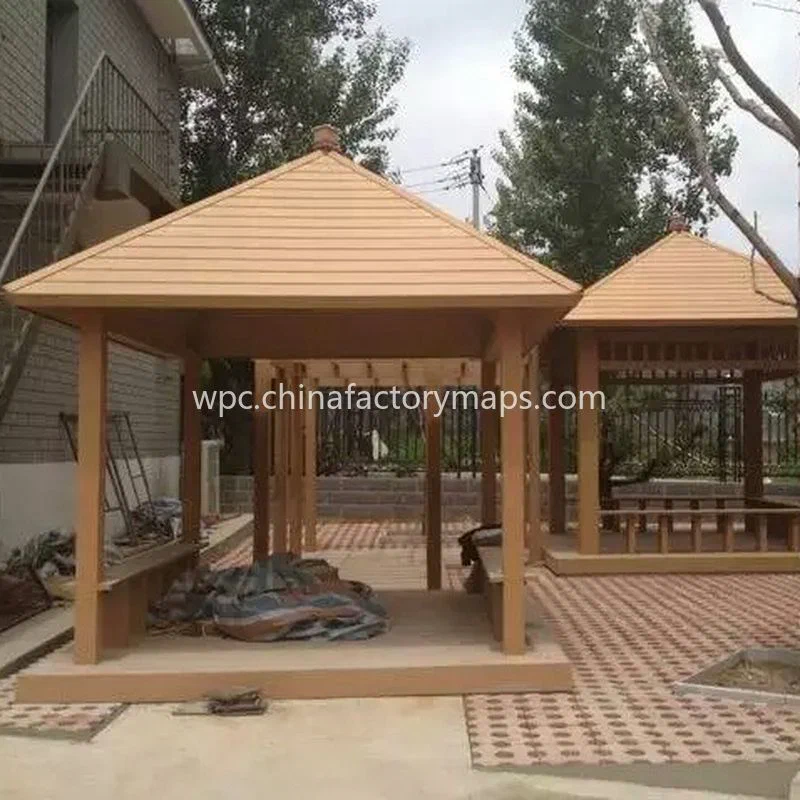
A composite deck order should be evaluated against the intended installation, not just the appearance of the sample board. Overseas buyers sourcing from China need to verify the factory’s actual production capabilities, material specifications, quality controls and export arrangements before committing to a bulk order. Supplier location also matters because inland transport and access to export ports can affect delivery planning.
Verify the Manufacturer Behind the Quotation

The first check is whether the supplier actually manufactures WPC decking or purchases finished boards from another factory. A trading company may handle communication, samples and shipping efficiently, but it does not necessarily control production schedules or material consistency. Buyers should ask for the factory’s registered business details, production address and a live view of the manufacturing floor. The answers should be consistent across the quotation, company profile and export documentation.
Production equipment provides another useful indication. Ask whether the supplier operates its own extrusion lines, mixing equipment, moulds and cutting facilities. A genuine manufacturer should be able to explain how raw materials enter production, how boards are extruded and cooled, and how finished products are inspected and packed. Request photographs or video showing identifiable production stages rather than relying entirely on catalogue images. If the supplier claims to manufacture several product categories, establish which processes take place in-house and which are outsourced.
A further distinction concerns technical communication. Manufacturers generally have direct access to production staff who can discuss changes to board dimensions, surface textures, profiles and packaging. A trading company may need to relay every technical question to an external factory. Neither arrangement automatically disqualifies a supplier, but the buyer should understand who is responsible when a specification is changed or a production defect appears.
Compare Material Specifications, Not Sample Appearance
Two boards can look almost identical while behaving differently after installation. Buyers should request a written specification covering the wood-fibre and plastic composition, board dimensions, wall thickness, weight, profile structure and surface finish. The supplier should also explain whether the product is solid or hollow and identify any reinforcement or internal structural features. These details influence handling, installation requirements and suitability for different outdoor applications.
Material composition deserves particular attention. WPC formulations vary in their proportions and types of wood-based material, polymers, pigments and additives. These differences affect density, dimensional stability, surface characteristics and resistance to environmental exposure. A supplier that describes a product simply as premium WPC without explaining its formulation offers limited information for comparison. Buyers do not necessarily need a proprietary recipe, but they should receive enough technical detail to distinguish one product specification from another.
Surface treatment is another point of variation. Conventional extruded boards and co-extruded products do not have identical construction. Co-extrusion adds an outer protective layer, but buyers should establish the actual structure and coverage rather than assume that every capped product provides the same performance. Request samples from the intended production specification. Compare dimensions, weight, edge quality, colour consistency and surface texture. A showroom sample alone is insufficient if the bulk order will use a different formulation or production line.
Performance claims need practical interpretation. WPC resists moisture and insect damage better than many untreated timber products, but it is not indestructible or absolutely waterproof. Prolonged exposure to sunlight can also cause colour fading. Ask suppliers for relevant test reports and clarify the test methods, sample specifications and issuing organisations. A document should correspond to the actual product being ordered, not merely to a similar product in the manufacturer’s catalogue.
Check Installation Requirements and Export Logistics
Installation compatibility is frequently overlooked during sourcing. WPC expands and contracts as temperatures change, so board spacing and perimeter clearances must accommodate movement. The supporting structure also needs adequate ventilation and drainage. Buyers should obtain the manufacturer’s installation instructions, including recommended joist spacing, fastening methods, end gaps and clearance from walls or fixed structures. These requirements should be checked against the expected climate and intended installation design.
Ask whether the supplier can provide matching accessories, such as clips, starter fasteners, edge trims and fascia boards. Accessory compatibility matters because board profiles and fastening systems differ between manufacturers. Substituting components from another supplier without checking dimensions can create installation problems. For projects involving stairs, balconies or poolside areas, verify the availability and suitability of the relevant profiles rather than assuming the standard decking board covers every application.
Supplier geography should form part of the purchasing assessment. Chinafactorymaps.com currently maps 49 WPC suppliers across Guangdong, Anhui, Shandong, Zhejiang, Shanghai and Jiangsu. The distribution gives buyers a practical starting point for comparing factory locations and transport routes. Guangdong has the largest mapped cluster, including Foshan, Guangzhou and Zhuhai. Anhui includes Xuancheng, Suzhou and Guangde, while Shandong includes Zibo, Linyi and Qingdao. Zhejiang’s mapped locations include Huzhou, Jiaxing and Hangzhou.
The nearest export port is relevant, but straight-line distance alone does not establish the lowest logistics cost or shortest delivery time. Buyers should ask for the factory’s actual loading location, inland transport arrangements, available container-loading facilities and expected transit schedule. The mapped port coverage includes Shanghai Port, Ningbo-Zhoushan Port, Shenzhen Port, Qingdao Port, Guangzhou Port and Tianjin Port, among others. A supplier in inland Anhui may use a different transport route from a manufacturer near a coastal port. Compare the complete factory-to-port arrangement rather than selecting a supplier solely because its map location appears convenient.

Before placing a bulk order, establish how production quality will be checked and how discrepancies will be handled. Agree on an approved reference sample, written specifications, packaging requirements and inspection arrangements before production begins. Clarify whether the factory permits pre-shipment inspection and whether rejected boards can be replaced or credited under the purchase agreement. Packaging should protect board edges and surfaces during container handling, while product labels should allow batches and specifications to be identified after arrival. The final purchase contract should identify the legal seller, payment milestones, delivery terms, shipment responsibilities and procedures for reporting defects. These checks give buyers a documented basis for comparing suppliers and resolving disagreements before goods leave China.
FAQ
Q: How can an overseas buyer tell whether a Chinese WPC supplier is a factory or a trading company?
A: Request the registered business details, physical production address, equipment information and evidence of in-house extrusion operations. Cross-check these details against the quotation and export documents, and establish which production processes are outsourced.
Q: Should buyers choose a WPC factory based on its distance from an export port?
A: Port proximity is one factor, not a complete logistics assessment. Compare inland transport arrangements, loading facilities, shipping routes and delivery terms before selecting a supplier.
Related Articles
Featured Suppliers
Verified premium suppliers on our map.
