
What Should Buyers Know About Composite Pergola Rafters?
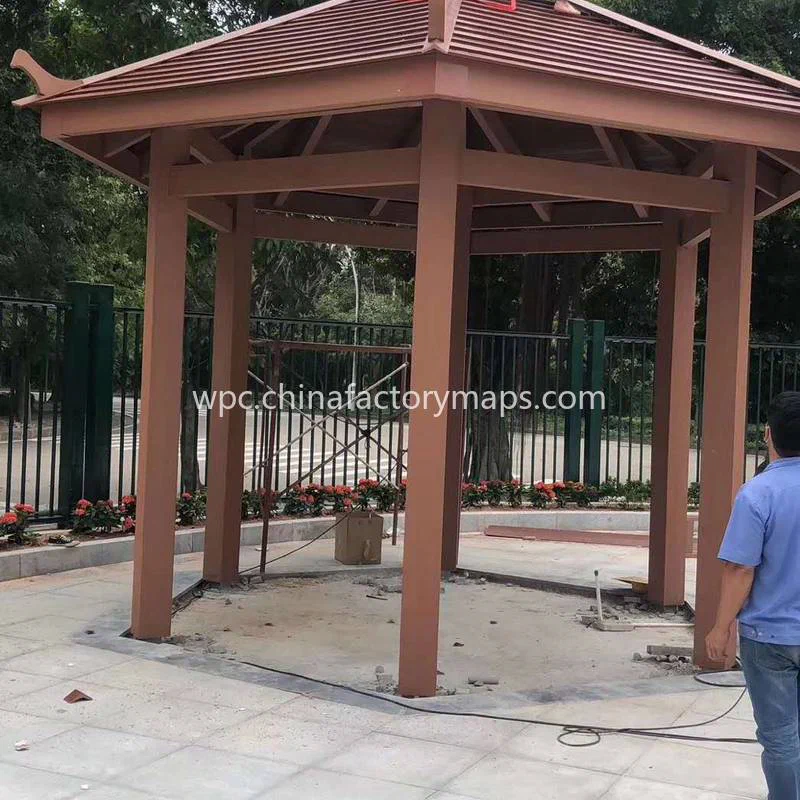
Composite pergola rafters are structural or decorative members used to support a pergola roof, shade elements, or overhead slats, depending on the design. Buyers considering wood-plastic composite (WPC) rafters need to distinguish products intended for structural loads from those designed primarily for appearance, because not every composite profile can safely span between supports or carry a roof.
For sourcing purposes, the key questions concern load capacity, profile construction, temperature movement, installation requirements, and the manufacturer’s technical documentation. WPC can reduce some of the maintenance associated with timber, but its suitability depends on the formulation, reinforcement, dimensions, and intended application.
Structural suitability and material composition
WPC combines wood fibres or wood flour with thermoplastics and additives. The proportions and manufacturing process affect stiffness, weight, surface finish, moisture response, and resistance to weathering. A profile that performs well as a decorative beam may not have sufficient rigidity for a long pergola span. Buyers should establish whether the proposed rafters are load-bearing components, non-structural covers, or slats attached to an independent frame.
Request technical data for the exact profile rather than relying on general claims about composite material. Relevant information includes cross-sectional dimensions, wall thickness, internal reinforcement, recommended support spacing, allowable loads, and deflection limits. If the pergola must resist wind uplift, snow, or other site-specific forces, the complete structure needs appropriate engineering assessment. Metal inserts or a separate metal frame may be required, depending on the design.

Material composition also matters. Solid and hollow profiles behave differently, and internal cavities can affect stiffness and fastening. Some products use co-extruded outer layers to improve surface performance, but a capped finish does not automatically make a profile suitable for structural use. Buyers should confirm the intended application in writing before comparing quotations.
Installation, movement, and weather exposure
Composite rafters expand and contract as temperatures change. Installation details must allow for this movement through appropriate end clearances, connection design, and spacing between adjacent components. Fixing a profile too tightly can lead to buckling, stress around fasteners, or distortion during temperature changes. The manufacturer’s installation instructions should specify the relevant clearances for the product and expected operating conditions.
Ventilation beneath and around the structure is equally important. A well-designed substructure allows water to drain and air to circulate rather than trapping moisture around connections or enclosed sections. WPC generally resists moisture-related deterioration and insect attack better than untreated timber, but it is not indestructible or absolutely waterproof. Standing water, poor drainage, unsuitable fasteners, and neglected connections can still create problems.
UV exposure introduces another consideration. Colour may fade under sustained sunlight, and surface appearance can change with age. Performance varies by formulation, pigments, protective layers, and exposure conditions. Buyers supplying projects in sunny climates should ask for available weathering data, information about expected colour change, and any stated limitations on outdoor use. Sample pieces can help assess the initial colour and texture, although a new sample cannot establish long-term weathering performance by itself.
Sourcing and supplier verification in China
Chinafactorymaps.com plots Chinese WPC factories geographically, allowing overseas buyers to compare mapped suppliers by location and distance to an export port. The directory currently covers clusters in Guangdong, Anhui, Shandong, Zhejiang, Shanghai, and Jiangsu. These locations provide a practical starting point for organising enquiries, but geographic proximity alone does not establish manufacturing capability or product quality.
A buyer sourcing composite pergola rafters should first check whether a factory produces structural profiles or mainly manufactures decking boards, fencing, and decorative panels. Ask for drawings, cross-sections, material specifications, available lengths, connection details, and evidence of previous projects involving comparable loads. If the factory relies on an external metal frame or reinforcement supplier, clarify which components it manufactures and which it sources elsewhere.

Production consistency deserves attention before an order is placed. Confirm how the factory controls profile dimensions, colour variation, surface defects, and batch-to-batch formulation. Where a project requires custom extrusion, discuss tooling ownership, sample approval, production tolerances, and the process for handling non-conforming goods. Inspection of production samples and a pre-shipment quality check can help identify discrepancies between approved specifications and delivered products.
Export logistics should be assessed alongside technical suitability. The mapped port network includes Shanghai Port, Ningbo-Zhoushan Port, Shenzhen Port, Qingdao Port, Guangzhou Port, and other major Chinese export ports. The nearest port shown on a map is a useful screening factor, not a complete freight-cost estimate. Inland transport, factory location, cargo dimensions, packing method, shipping schedules, and the destination all affect the final logistics arrangement. Buyers should compare supplier quotations on the same basis, including packaging, export handling, documentation, and responsibility for transport to the port.
FAQ
Q: Can WPC rafters support a pergola roof?
A: Some profiles may be suitable for structural use, but others are intended for decorative applications. Confirm the load ratings, support spacing, and engineering requirements for the exact product before specifying it.
Q: Do composite pergola rafters need expansion gaps?
A: Yes. WPC expands and contracts with temperature, so installation must allow for movement at ends and connections in accordance with the manufacturer’s instructions.
Q: How should buyers compare Chinese WPC rafter suppliers?
A: Compare technical documentation, structural suitability, production controls, sample quality, and export arrangements. A map-based directory can help shortlist factories by location and port distance, but each supplier’s capabilities require independent verification.
Featured Suppliers
Verified premium suppliers on our map.
