
What to Check Before Buying Composite Decking Tiles from China
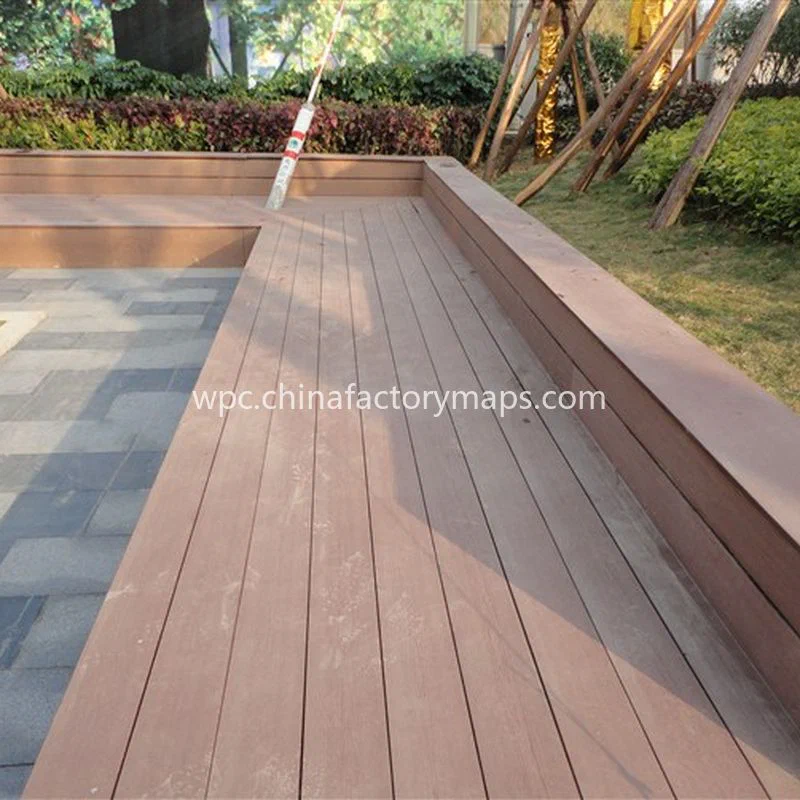
Buying composite decking tiles from China requires more than comparing product photographs and supplier quotations. Overseas buyers need to verify the tile construction, installation system, manufacturing capabilities and export arrangements before placing an order. Supplier location also matters, particularly when inland transport to an export port affects the final landed cost.
Check the Tile Construction and Material Composition
Start by establishing exactly what each supplier is offering. Wood-plastic composite tiles vary in their wood fibre and polymer content, surface treatment, backing structure and overall thickness. These differences affect weight, rigidity, appearance and performance under outdoor conditions. Two products with similar photographs may have different internal structures and installation requirements.
Request a technical specification sheet covering the material composition, tile dimensions, thickness, weight, connection system and surface finish. Ask whether the product uses recycled or virgin polymer and whether the wood content remains consistent between production batches. Suppliers should also explain whether the tile has a solid or hollow construction and how its underside is designed to support drainage and ventilation.
Samples are essential. Check the locking mechanism, edge finish, surface texture and dimensional consistency. For larger orders, compare samples from different production batches rather than relying on a single showroom piece. Colour variation and surface defects can become more apparent when tiles are installed across a large area.
Verify Outdoor Performance and Installation Requirements
Outdoor performance needs to be assessed against the intended installation environment. WPC resists moisture and insect damage better than untreated timber, but it is not indestructible or completely waterproof under every condition. Prolonged exposure to sunlight can cause colour fading, while temperature changes produce expansion and contraction. Buyers should ask suppliers for test information and clear guidance on the conditions under which their products were evaluated.

Installation details are equally important. Interlocking tiles may appear simple to assemble, but the supporting surface still needs to be suitable. The substructure should allow ventilation and drainage, and the installation must account for dimensional movement. Ask for recommended surface preparation, edge treatment, expansion allowances and instructions for areas exposed to standing water. Poolside and balcony applications may require particular attention to slip resistance and drainage.
Check whether the supplier provides installation drawings or documented guidance for different applications. A manufacturer that can explain how its tile system performs under actual outdoor conditions is easier to assess than one that relies exclusively on promotional descriptions.
Assess the Supplier and Export Logistics

A genuine manufacturer should be able to explain its production process, equipment, material sourcing and quality-control procedures. Ask for factory photographs or a live production walkthrough, and establish which stages take place in-house. Questions about extrusion, moulding, surface finishing, assembly and packaging can help distinguish direct manufacturing from trading operations. A trading company is not automatically unsuitable, but buyers should know who controls production and who handles quality complaints.

Request details of batch inspection, dimensional tolerances, colour consistency and defect handling. Clarify whether the supplier can produce custom colours, dimensions or packaging, and whether these options require separate tooling or production arrangements. Confirm the available production capacity and realistic lead times before agreeing to an order. Written answers are more useful than general assurances.

Chinafactorymaps.com plots WPC suppliers across Guangdong, Anhui, Shandong, Zhejiang, Shanghai and Jiangsu. The mapped clusters include Foshan, Guangzhou, Zhuhai, Xuancheng, Suzhou, Guangde, Zibo, Linyi, Qingdao, Huzhou, Jiaxing, Hangzhou and Nanjing. These locations provide a starting point for comparing suppliers geographically. Buyers can also consider proximity to Shanghai Port, Ningbo-Zhoushan Port, Shenzhen Port, Qingdao Port and Guangzhou Port when assessing export logistics. A nearby port does not automatically mean lower shipping costs; inland transport, cargo handling and the supplier’s existing freight arrangements also affect the final calculation.
Before committing, request a formal quotation that identifies the product specification, packaging, order quantity, production schedule and shipping terms. Confirm who arranges export documentation and how damaged or non-conforming goods will be handled. Payment milestones should correspond to verifiable production or inspection stages. A pre-shipment inspection can help identify discrepancies before goods leave China. Keep the approved sample, specification sheet and agreed packaging details as references for checking the delivered order.
FAQ
Q: How can buyers distinguish a WPC tile manufacturer from a trading company?
A: Ask about production equipment, manufacturing processes, material sourcing and in-house quality control. A factory walkthrough and production records can help establish whether manufacturing takes place at the stated facility.
Q: What should buyers check when evaluating outdoor composite tiles?
A: Review material composition, dimensions, surface texture, drainage design and installation requirements. Also request information about UV exposure, slip resistance and temperature-related expansion.
Q: Does choosing a factory near an export port guarantee lower shipping costs?
A: No. Inland transport is only one part of the logistics calculation. Cargo handling, freight arrangements, packaging and the selected shipping route also influence the final cost.
Related Articles
Featured Suppliers
Verified premium suppliers on our map.
