
Where China's Composite Cladding Industry Produces Different Colours
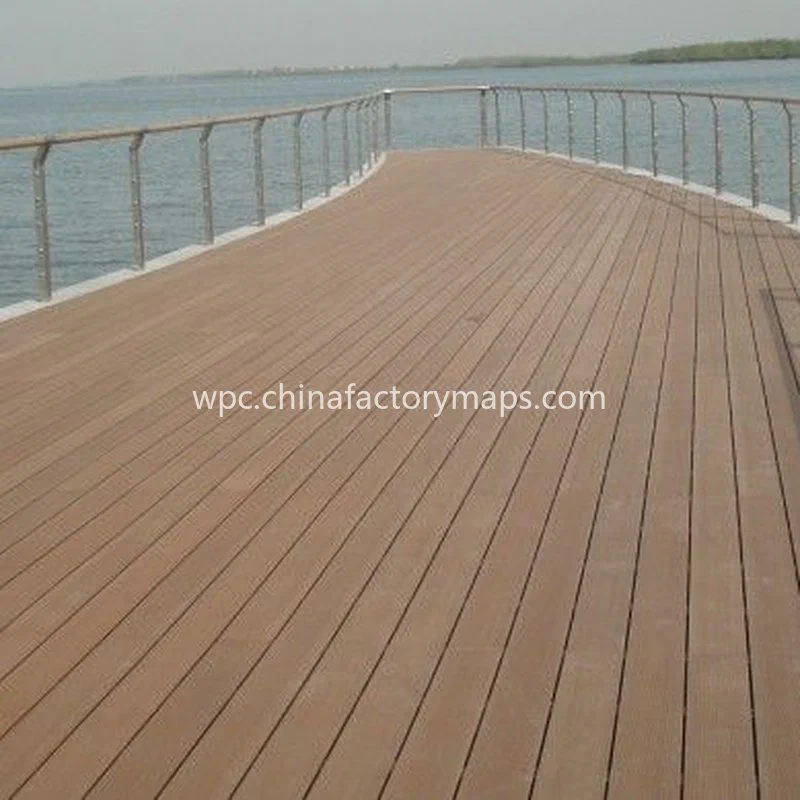
Composite cladding colours vary by formulation, surface treatment and production process, but a buyer’s sourcing options also depend on where factories are located. China’s mapped wood-plastic composite (WPC) suppliers are concentrated in several provinces, with Guangdong and Anhui forming the largest clusters in the current directory. These locations give buyers a practical starting point for comparing colour ranges, manufacturing capabilities and export routes.
Where China’s WPC suppliers cluster
Guangdong has the largest mapped concentration, with 22 listed suppliers across the province, including Foshan, Guangzhou and Zhuhai. This concentration gives buyers a useful starting point when sourcing exterior cladding in different shades, from conventional wood tones to darker architectural finishes. Foshan’s established building-materials manufacturing base provides relevant industrial context, while the wider Pearl River Delta connects manufacturers with component suppliers, processing services and export infrastructure. These regional conditions can support product development and repeat production, although the capabilities of individual factories still need to be verified.
Anhui follows with nine listed suppliers, including locations in Xuancheng, Suzhou and Guangde. Its presence gives buyers an alternative to the southern manufacturing cluster, particularly when comparing factories with different production specialisations and transport requirements. The broader availability of industrial land and manufacturing facilities can support extrusion-based production, but location alone does not establish a factory’s output capacity or colour consistency. Buyers should compare the actual product range, tooling arrangements and finishing processes rather than assuming that suppliers within one province offer identical specifications.
Shandong has seven mapped suppliers, including Zibo, Linyi and Qingdao, while Zhejiang has six, including Huzhou, Jiaxing and Hangzhou. Shanghai accounts for three listed suppliers, and Jiangsu has two, including Nanjing. These eastern and northern locations broaden the available sourcing base. Their proximity to established manufacturing networks and major transport corridors can be relevant when evaluating supply arrangements. However, the directory’s mapped counts indicate supplier locations, not total regional production volumes or a ranking of manufacturing quality. A smaller cluster may still contain a suitable specialist for a particular profile, surface finish or project specification.
What regional production means for colour selection

Colour choice starts with the material system. WPC cladding generally combines wood-based material with a thermoplastic polymer and additives, with the proportions and processing conditions influencing appearance and performance. Pigments, surface embossing, brushing, co-extruded outer layers and other finishing methods can produce different visual effects. A factory offering several brown shades may not necessarily have the same capabilities for charcoal, grey or lighter contemporary finishes. Buyers should request a current colour chart and physical samples from the specific product series under consideration.

The map helps narrow the supplier search, but colour consistency requires a closer technical review. Ask whether the quoted finish is achieved through the main material formulation, a surface treatment or a separate protective layer. These approaches can affect scratch visibility, weathering behaviour and the appearance of cut edges. For projects requiring colour matching across multiple shipments, buyers should establish an approved reference sample and confirm how production batches are checked. It is also useful to clarify whether custom colours require new tooling, a minimum production run or additional lead time; these conditions vary by factory and should not be inferred from regional averages.

Outdoor exposure is another consideration. WPC cladding resists moisture and insect damage better than many untreated wood products, but it is not indestructible or completely waterproof in every installation. Sustained ultraviolet exposure can fade colours, and temperature changes cause expansion and contraction. Darker finishes may absorb more solar heat than lighter ones, affecting surface temperatures and potentially increasing movement. Buyers specifying façades should ask for product-specific weathering information and installation guidance, including expansion gaps, fixing details and a ventilated substructure. A colour that looks suitable on a small indoor sample may appear different across a sunlit exterior elevation.
Matching factory location to export requirements
Transport access becomes important once the product specification is established. Guangdong buyers may compare factories against Shenzhen Port and Guangzhou Port, while eastern suppliers may assess routes through Shanghai Port or Ningbo-Zhoushan Port. Shandong locations can be evaluated in relation to Qingdao Port, and Shanghai and Jiangsu suppliers may have access to Shanghai Port or Taicang Port, depending on the factory and shipping arrangement. These are starting points for logistics comparisons, not guarantees that a particular factory uses the nearest port or offers the lowest freight cost.
A mapped distance is useful, but road distance to a port does not equal total shipment cost or transit time. Truck availability, container loading arrangements, inland handling, sailing schedules and the destination market all affect the final calculation. Buyers should request the factory’s normal export port, the proposed shipment terms and an estimated inland transport arrangement before comparing quotations. For bulky cladding profiles, packaging dimensions and container utilisation can matter as much as the nominal distance to a terminal.
The most practical sourcing process combines the map with product-level verification. Start with the provinces that suit the intended shipping route, then shortlist factories whose documented colour range matches the project. Compare samples under consistent lighting, confirm the surface finish and obtain written specifications for dimensions, tolerances, UV performance and installation. Check whether replacement boards can be supplied in the same colour later, especially for commercial developments where repairs may occur years after installation. Regional clusters help identify where to search; the final decision should rest on verified product suitability, production controls and the full delivered cost.
FAQ
Q: Which Chinese province has the largest mapped cluster of WPC suppliers?
A: Guangdong has the largest cluster in this directory, with 22 listed suppliers across Foshan, Guangzhou, Zhuhai and other locations in the province.
Q: Can buyers source different composite cladding colours from the same factory?
A: Many factories offer multiple colour options, but the available shades and finishing methods vary by product series. Buyers should confirm current samples, batch consistency and any conditions for custom colours directly with each supplier.
Q: Which export ports should buyers compare when sourcing WPC cladding from China?
A: Relevant options include Shenzhen Port, Guangzhou Port, Shanghai Port, Ningbo-Zhoushan Port and Qingdao Port, depending on the factory’s location and shipping arrangements. Confirm the actual export route and inland transport costs before making a comparison.
Featured Suppliers
Verified premium suppliers on our map.
