
Where Chinese Factories Produce Composite Deck Boards in Different Thicknesses
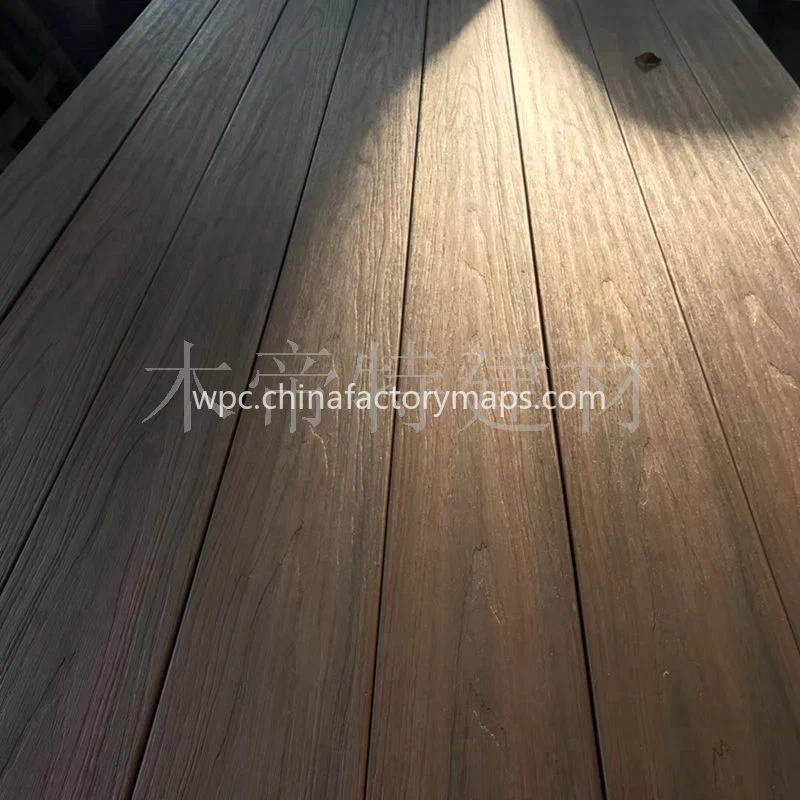
Chinese composite deck board production is concentrated in several coastal and eastern provinces, with Guangdong, Anhui, Shandong and Zhejiang accounting for most of the suppliers currently mapped on chinafactorymaps.com. Their factories serve different parts of the manufacturing and export chain, from extrusion and profile production to finished decking supply. For overseas buyers comparing board thicknesses, the location of a factory can be as important as its product specifications.
The mapped supplier distribution places Guangdong in the leading position, with 22 listed factories, including clusters in Foshan, Guangzhou and Zhuhai. Foshan has an established building materials manufacturing base, supported by industrial suppliers, processing businesses and access to regional transport infrastructure. This environment suits manufacturers producing WPC profiles in different dimensions, including decking boards intended for residential terraces, commercial outdoor spaces and landscaping projects. Guangzhou adds access to a major trading and logistics centre, while Zhuhai provides another manufacturing location within the wider Pearl River Delta. Shenzhen Port and Guangzhou Port are relevant export gateways for buyers sourcing from this province. The concentration does not mean every Guangdong factory offers the same thickness range. It provides a larger group of potential suppliers to compare.

Anhui has nine listed suppliers, with mapped locations including Xuancheng, Suzhou and Guangde. Its position is different from Guangdong’s coastal manufacturing environment. Factories in this province can benefit from access to regional industrial supply networks, manufacturing labour and transport connections to eastern China’s larger commercial centres. The broader region also has established plastics processing and manufacturing activity, which supports the equipment and technical knowledge required for extrusion-based products. For WPC decking, extrusion capacity matters because board thickness is controlled through profile design, die configuration and production settings. A manufacturer producing standard hollow boards may have a different equipment setup from one making thicker solid profiles or reinforced sections. Buyers considering Anhui should therefore compare actual production capabilities rather than assume that factories within one provincial cluster share identical product ranges. Connections towards Shanghai Port and other eastern export routes can also influence the practical cost of moving finished goods.
Shandong accounts for seven mapped suppliers, including factories in Zibo, Linyi and Qingdao. The province has a substantial industrial base, with activity across plastics processing, building materials, timber-related manufacturing and machinery. These overlapping industries provide a useful environment for composite board production, where manufacturers combine polymer processing with wood-based raw materials and profile extrusion. Linyi is particularly relevant as a recognised timber and wood products trading and processing centre. That industrial background can support access to wood-related inputs and businesses familiar with material processing. Zibo adds another manufacturing location within the province, while Qingdao offers direct proximity to Qingdao Port. This is a practical distinction for international buyers. A factory closer to an export port may simplify inland transport arrangements, although the actual advantage depends on its factory address, shipment volume and logistics provider. Shandong is worth comparing when port access and established industrial supply networks are important purchasing considerations.
Zhejiang has six listed suppliers, located in Huzhou, Jiaxing and Hangzhou. Its manufacturing environment benefits from the wider Yangtze River Delta industrial network, where plastics processing, machinery, building products and export-oriented manufacturing operate alongside one another. Huzhou and Jiaxing provide access to regional production and transport networks, while Hangzhou connects manufacturers with a broader commercial and industrial ecosystem. Buyers assessing this cluster should pay attention to how each factory handles different decking constructions. A thicker board is not automatically a stronger board: wall thickness, internal rib arrangement, polymer formulation and the distribution of material across the profile all affect performance. Hollow and solid profiles can have similar external dimensions but differ considerably in weight and structural behaviour. Ningbo-Zhoushan Port and Shanghai Port are important export options for the wider region. The nearest practical gateway will depend on the factory’s precise location and the route selected by its freight provider.

Shanghai and Jiangsu represent smaller mapped clusters, with three suppliers in Shanghai and two in Jiangsu, including Nanjing. Their importance is not necessarily reflected by supplier count alone. Shanghai is a major international shipping and trading centre, with Shanghai Port providing a significant export connection. Taicang Port is another relevant gateway for manufacturers operating within the surrounding Yangtze River Delta. Jiangsu factories may benefit from proximity to regional machinery suppliers, polymer processors and established industrial transport routes. For buyers, these locations can make it easier to compare factory production with the logistics arrangements needed for international shipments. However, a short distance to a port does not automatically guarantee lower landed costs. Container availability, inland handling, customs arrangements and the location of the actual production facility all matter. A supplier with a slightly longer inland route may still offer a more suitable profile or production arrangement.
Board thickness is a specification that requires careful comparison across all these regions. Buyers searching for how thick is composite deck boards should distinguish between overall board height and the thickness of the individual walls forming the profile. Manufacturers may offer slim hollow sections, standard decking profiles, thicker structural designs and solid boards, but the available dimensions vary by factory and product series. A specification sheet should identify the overall width and height, wall thickness, internal structure, weight per unit length and recommended joist spacing. It should also clarify whether the stated dimensions refer to the finished board or an unfinished production profile. Temperature-related expansion and contraction must be considered when planning installation. Appropriate gaps and a ventilated substructure are necessary, particularly in outdoor applications exposed to changing weather. WPC resists moisture and insect damage better than untreated timber, but it is not indestructible. Sustained ultraviolet exposure can also cause colour fading. These factors make installation requirements and material composition relevant when comparing products with similar dimensions.
The map provides a starting point for matching manufacturing regions with procurement priorities. Guangdong offers the largest mapped supplier pool, making it useful for buyers seeking several manufacturers to compare within one provincial cluster. Anhui provides an alternative eastern manufacturing base, while Shandong combines industrial activity with access to Qingdao Port. Zhejiang and the Shanghai–Jiangsu area offer connections to the wider Yangtze River Delta supply and export network. The best sourcing location depends on the required board profile, production consistency, order specifications and shipping route. Before requesting quotations, buyers should prepare a common technical specification covering board dimensions, wall thickness, profile type, surface finish, colour requirements and intended application. Factory verification should establish whether the supplier manufactures the boards directly or purchases finished profiles from another producer. Comparing samples, technical drawings and production capabilities across factories in the same region can reveal differences that a location listing alone cannot show. Distance-to-port information is most useful when considered alongside these product checks and the final destination of the shipment.
FAQ
Q: How thick are composite deck boards typically?
A: Thickness varies by manufacturer and profile design. Buyers should compare overall board height with individual wall thickness rather than treating them as the same measurement.
Q: Which Chinese province has the most mapped WPC decking suppliers?
A: Guangdong has the largest mapped cluster, with 22 listed suppliers across Foshan, Guangzhou and Zhuhai.
Q: Which export ports are relevant when sourcing composite decking from China?
A: Shanghai Port, Ningbo-Zhoushan Port, Shenzhen Port, Qingdao Port and Guangzhou Port are among the covered gateways. The most suitable option depends on the factory’s location and shipping arrangements.
Related Articles
Featured Suppliers
Verified premium suppliers on our map.
