
Where Composite Decking Gates Are Made Across China's Factory Clusters
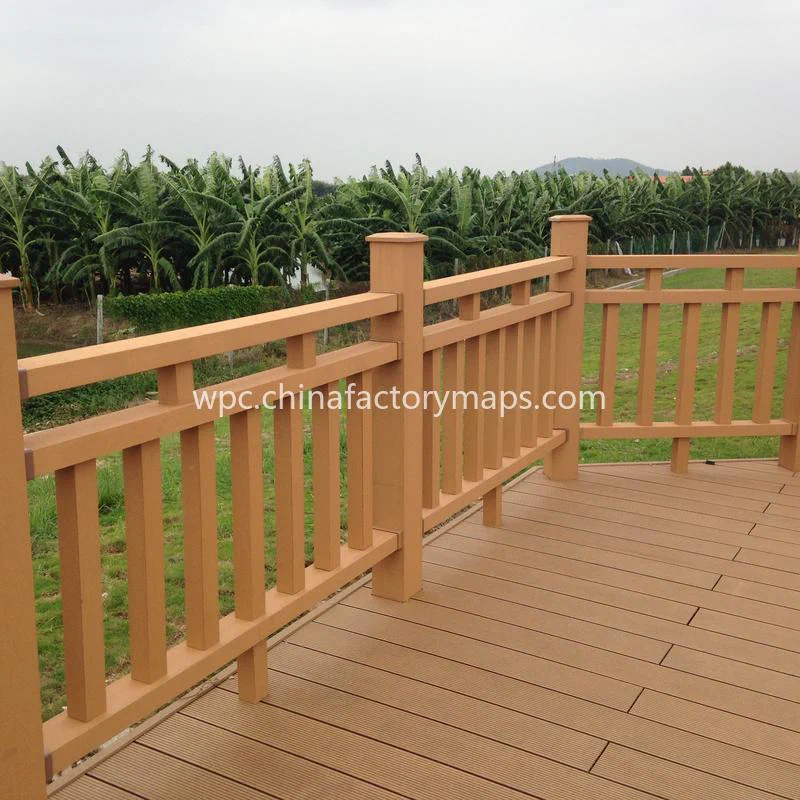
China’s WPC decking factories are distributed across several manufacturing clusters, with the largest concentration in Guangdong, followed by Anhui, Shandong and Zhejiang. The factory map at chinafactorymaps.com helps overseas buyers compare these regions and assess their proximity to export ports. For sourcing composite decking gates, the location of a supplier matters alongside its production capabilities, product specifications and shipping arrangements.
Where China’s WPC Manufacturing Clusters Sit
Guangdong has the largest mapped concentration, with 22 listed suppliers across Foshan, Guangzhou and Zhuhai. The region offers access to an established manufacturing base, plastics processing, extrusion equipment and supporting industrial services. These factors can help manufacturers source components, maintain production lines and coordinate orders across related product categories. Guangdong also provides access to Shenzhen Port and Guangzhou Port, giving exporters options when planning container shipments. Buyers comparing factories here should still check each supplier’s actual production scope rather than assume that every WPC manufacturer produces decking, gates and matching outdoor components.

Anhui forms the second-largest cluster, with nine listed suppliers in Xuancheng, Suzhou and Guangde. Its position on the map gives buyers a different sourcing area to compare against the coastal manufacturing centres. Regional industrial costs, access to polymer and wood-based inputs, and the availability of extrusion capacity can influence a factory’s operating model, although these factors vary by individual site. Anhui-based suppliers may also use inland transport to reach export gateways, making the full factory-to-port route important. A lower quoted manufacturing cost does not necessarily translate into a lower delivered cost if inland haulage, handling and transit time offset the difference.

Shandong has seven mapped suppliers, including factories in Zibo, Linyi and Qingdao. Zhejiang has six, located in Huzhou, Jiaxing and Hangzhou, while Shanghai accounts for three and Jiangsu has two in Nanjing. These smaller mapped groups broaden the sourcing picture beyond Guangdong and Anhui. Shandong offers a northern manufacturing option with access to Qingdao Port and other regional gateways. Zhejiang and Jiangsu sit within an established eastern industrial corridor, where buyers can compare factory locations against Shanghai Port, Ningbo-Zhoushan Port and Taicang Port. The map identifies supplier locations; it does not establish that every factory has the same equipment, output capacity or export experience.
How Location Affects a Buyer’s Decision
The manufacturing base behind WPC products depends on several connected inputs. Producers blend wood-based material with thermoplastics and additives, then process the compound through extrusion or other suitable forming methods. Consistent output requires control over formulation, temperature, tooling and cooling. Access to raw materials and equipment maintenance can affect production continuity, while skilled operators influence dimensional consistency and surface finish. Local industry history may support these capabilities, but a regional cluster is only a starting point for supplier evaluation. Buyers should request product-specific technical data, confirm whether extrusion and finishing take place at the listed site, and establish whether the factory handles custom profiles or relies on outside processors.

Port proximity adds a separate cost and planning consideration. The directory covers Shanghai Port, Ningbo-Zhoushan Port, Shenzhen Port, Qingdao Port, Guangzhou Port, Tianjin Port, Xiamen Port, Taicang Port, Beibu Gulf Port, Rizhao Port, Lianyungang Port and Yingkou Port. A nearby port may reduce inland transport requirements, but the shortest map distance does not guarantee the simplest shipment. Road access, container availability, terminal selection, carrier schedules and the destination market all affect the final route. Buyers should compare the actual dispatch location with the proposed loading port and request a clear breakdown of inland freight, export handling and other applicable charges before comparing quotations.
Product suitability also needs to be checked independently of geography. WPC decking expands and contracts with temperature, so installation requires appropriate gaps and a ventilated supporting structure. The material generally resists moisture and insect damage better than untreated timber, but it is not indestructible. Sustained ultraviolet exposure can fade colour, and performance varies with formulation, profile design and surface treatment. For gate-related applications, buyers should verify the intended use, structural requirements, fixing method and compatibility with posts, frames or hardware. Samples, technical drawings and installation guidance provide a more useful basis for comparison than a supplier’s regional location alone.
Using the Map to Shortlist Suppliers

The directory’s 49 mapped suppliers provide a practical starting point for building a regional shortlist. Buyers can begin with Guangdong when comparing its larger concentration of listed factories, then assess Anhui and the eastern or northern clusters according to product requirements and logistics. The appropriate comparison depends on the order: standard decking profiles, custom colours, co-extruded surfaces and gate components may require different production capabilities. The mapped location should therefore be treated as a filter, not a quality rating or proof of manufacturing capacity.
A useful shortlist records the factory’s city, verified production address, relevant product range, available technical documentation and proposed export port. Buyers should also ask about material composition, colour consistency between batches, dimensional tolerances, packaging and production lead times. For larger orders, confirm how defects are handled and whether replacement stock can be produced to match the original batch. Comparing suppliers on the same specifications and delivery basis makes regional differences easier to interpret and reduces the risk of choosing a factory solely because it appears closer to a port.
FAQ
Q: Which Chinese province has the largest mapped concentration of WPC factories?
A: Guangdong has the largest concentration in the directory, with 22 listed suppliers across Foshan, Guangzhou and Zhuhai. The number indicates mapped supplier coverage, not verified production capacity or market share.
Q: How should buyers compare WPC factories across different regions?
A: Compare product specifications, manufacturing capabilities, quality controls and total transport costs from the factory to the destination. Use the map to shortlist locations, then verify the factory’s production address and proposed export route.
Related Articles
Featured Suppliers
Verified premium suppliers on our map.
