
Where WPC Adhesive Products Are Made in China's Factory Clusters
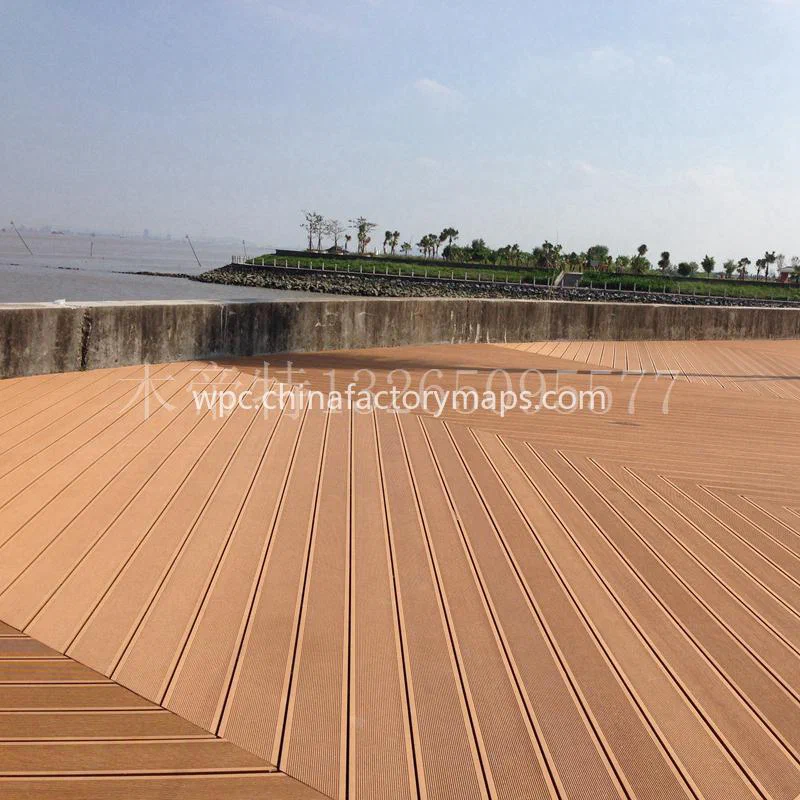
WPC adhesive products are manufactured across several of China’s mapped wood-plastic composite factory clusters, with Guangdong, Anhui, Shandong and Zhejiang accounting for much of the supplier coverage. The geographic distribution matters to buyers because adhesive production, WPC extrusion, component assembly and export logistics do not necessarily operate in the same location.
Where the supplier clusters are located

Guangdong has the largest mapped concentration, with 22 listed suppliers across Foshan, Guangzhou and Zhuhai. The province has an established building-materials manufacturing base, supported by industrial supply networks, plastics processing and access to export infrastructure. Foshan is particularly relevant as part of a wider building-materials production area. Guangzhou and nearby manufacturing centres add access to transport and port services. For buyers sourcing WPC adhesive products alongside decking, wall panels or fencing components, this concentration provides opportunities to compare related manufacturers within the same regional supply network.
Anhui has nine mapped suppliers, including manufacturers in Xuancheng, Suzhou and Guangde. Its position reflects the broader industrial development of eastern China, where manufacturing costs, available industrial land and access to neighbouring production markets influence factory location. Shandong accounts for seven suppliers, with Zibo, Linyi and Qingdao represented. Zhejiang has six, including Huzhou, Jiaxing and Hangzhou. These clusters are relevant because adhesive products are often connected to downstream composite manufacturing. Proximity to extrusion facilities can reduce coordination requirements when buyers need compatible bonding materials, surface treatments or production inputs.
Manufacturing geography and export access
The distribution of WPC suppliers is also shaped by the relationship between raw materials and processing capacity. Wood flour, recycled plastics and polymer additives form part of the wider WPC production chain. Factories need access to these inputs, compounding equipment and extrusion capacity. Established plastics and building-materials industries provide a foundation for this activity. Labour availability and existing supplier relationships also influence where production develops. However, a mapped WPC factory is not automatically an adhesive specialist. Buyers researching wpc kleben should distinguish manufacturers of bonding agents from WPC profile producers and factories that use adhesives in secondary assembly or finishing.

Port access adds another consideration. Guangdong suppliers can be assessed against Shenzhen Port and Guangzhou Port, while Zhejiang manufacturers may have access to Ningbo-Zhoushan Port. Shanghai Port is relevant to suppliers in Shanghai and nearby parts of Anhui, Jiangsu and Zhejiang. Shandong manufacturers can be compared with Qingdao Port and Rizhao Port. The directory also covers Tianjin Port, Xiamen Port, Taicang Port, Beibu Gulf Port and Lianyungang Port. Actual transport distance depends on the factory’s location, road connections and freight arrangements, rather than the province name alone.
For procurement teams, regional selection should follow the product specification and shipping route. A buyer sourcing adhesive for WPC assembly should first confirm the adhesive chemistry, substrate compatibility, curing conditions and intended application. Technical documentation and sample testing are important, particularly where bonding involves different polymer formulations or outdoor exposure. For finished WPC products, installation conditions also matter: composite materials expand and contract with temperature, require appropriate gaps and ventilated substructures, and can experience colour fading under sustained UV exposure. Moisture and insect resistance do not make the material indestructible. Comparing mapped factories by location and distance to export ports helps narrow the supplier search, but factory capability and product suitability still require direct verification.
FAQ
Q: Which Chinese province has the largest mapped WPC supplier cluster?
A: Guangdong has the largest listed cluster, with 22 suppliers across Foshan, Guangzhou and Zhuhai.
Q: Which export ports are relevant when sourcing WPC adhesive products from China?
A: Relevant ports include Shenzhen Port, Guangzhou Port, Shanghai Port, Ningbo-Zhoushan Port, Qingdao Port and Rizhao Port. The nearest practical port depends on the individual factory location and transport arrangements.
Q: Are all mapped WPC factories adhesive manufacturers?
A: No. The directory maps WPC-related factories, which may produce composite profiles, panels or other components rather than specialist adhesives. Buyers should verify adhesive manufacturing capability directly with each supplier.
Featured Suppliers
Verified premium suppliers on our map.
