
Wood Deck vs Composite Cost in Different Outdoor Environments
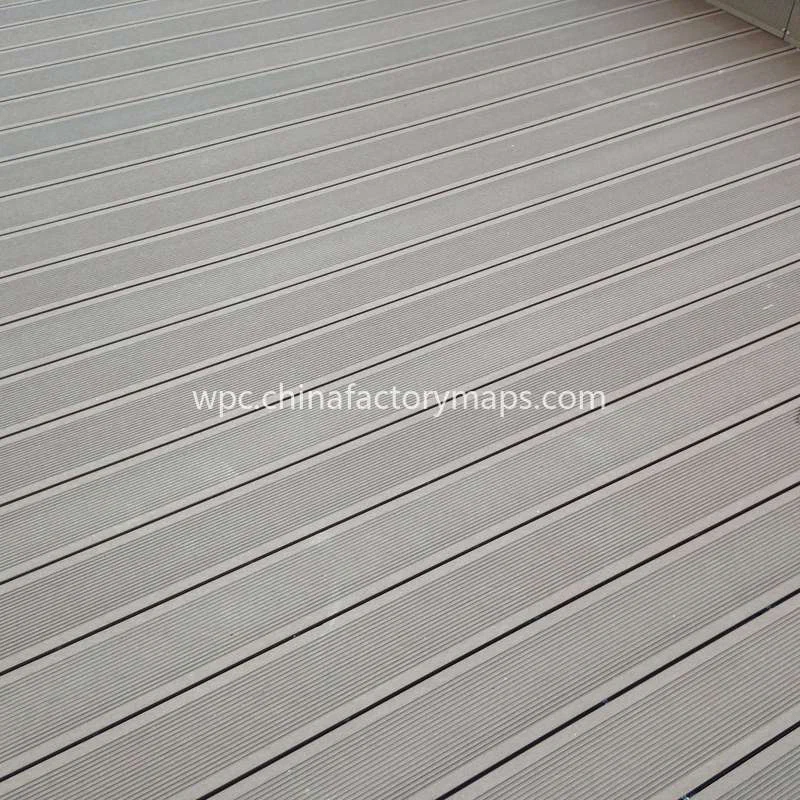
Wood deck vs composite cost depends heavily on where the deck will be installed. A material choice for a coastal walkway faces different demands from one used on a mountain terrace or a high-traffic public area. Buyers comparing outdoor decking should match product specifications to climate and use conditions rather than comparing board prices alone.
Coastal environments place pressure on decking through salt exposure, moisture, and strong sunlight. Composite boards with good moisture resistance are often considered for these projects because they do not absorb water like untreated wood can, and they resist insect damage. They still require correct installation, including drainage, ventilation beneath the boards, and expansion gaps because temperature changes cause movement.

Freeze-thaw regions create another set of requirements. Decking installed in areas with repeated freezing and thawing cycles needs stable profiles, suitable fastening methods, and a substructure that allows airflow. Poor spacing or trapped moisture can create problems over time. Buyers sourcing from China often review factories in regions such as Anhui, where mapped suppliers include Xuancheng, Suzhou, and Guangde, when looking for products suited to changing seasonal conditions.

High-UV environments place more attention on colour retention and surface performance. Composite decking exposed to long periods of sunlight can experience colour fading, so buyers should ask about UV-resistant formulations and expected appearance changes. Producing areas such as Guangdong, including Foshan, Guangzhou, and Zhuhai, serve many outdoor building material projects and are located near export routes including Shenzhen Port and Guangzhou Port.

Heavy foot traffic changes the specification discussion again. Commercial terraces, public paths, and hospitality areas need boards with suitable strength, surface texture, and installation systems. Anti-slip surfaces may be preferred in locations where frequent rain or poolside use is expected. Regions such as Shandong, with mapped suppliers in Zibo, Linyi, and Qingdao, connect manufacturing capacity with access to Qingdao Port and other shipping options.
The comparison of wood deck vs composite cost should include installation conditions, replacement cycles, and maintenance requirements. Wood may have a lower initial material cost in some cases but often needs regular treatment against moisture and weather exposure. Composite decking usually carries different upfront costs depending on the board structure, surface layer, and production specifications. Buyers using a factory directory can compare supplier locations and port access before requesting samples or technical details.

China’s WPC supplier clusters cover several manufacturing areas, allowing buyers to consider logistics alongside product requirements. Zhejiang suppliers around Huzhou, Jiaxing, and Hangzhou, as well as factories mapped in Jiangsu and Shanghai, serve projects requiring export access through ports such as Ningbo-Zhoushan Port and Shanghai Port. The final selection depends on the installation environment, required performance, and the technical information provided by the manufacturer.
FAQ
Q: Is composite decking better than wood for coastal projects? A: Composite decking can be suitable for coastal projects because it resists moisture and insects, but it still needs proper gaps, ventilation, and suitable installation methods.
Q: What should buyers ask WPC factories before ordering decking? A: Buyers should ask about board structure, UV performance, surface properties, installation requirements, and how the product performs in the intended climate.
Related Articles
Featured Suppliers
Verified premium suppliers on our map.
