
WPC Decking Installation: Hidden Clips or Face-Fixed Screws?
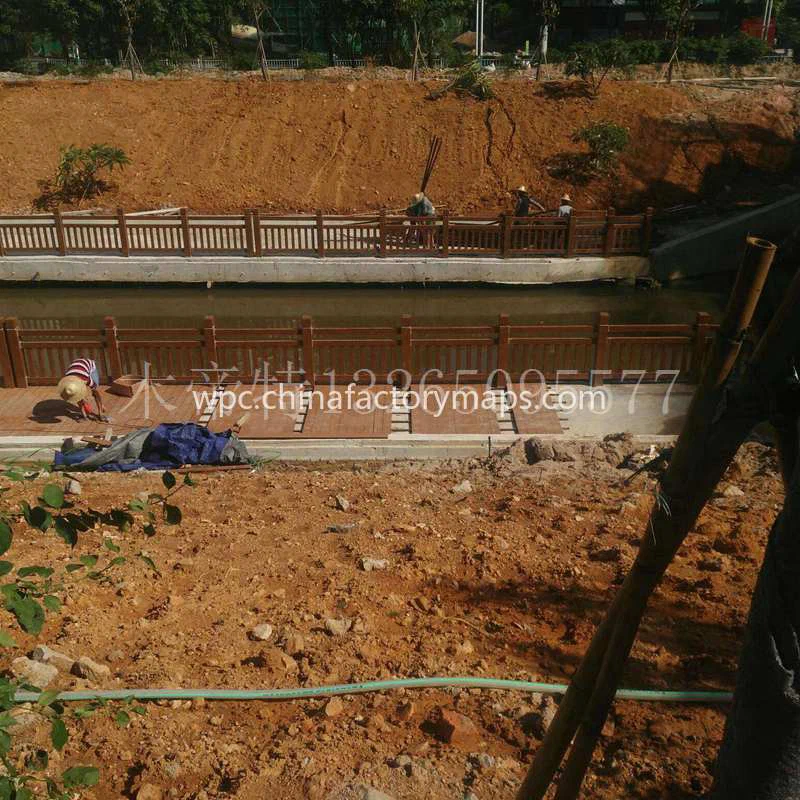
WPC decking installation depends on more than the choice of board profile. The fastening system determines how boards are secured, how much movement they can accommodate and how the finished surface can be maintained. Hidden clips and face-fixed screws serve different installation requirements, and the right choice depends on board design, substructure and site conditions.
How the Two Fixing Systems Differ

Hidden clips attach decking boards through grooves along their edges. A clip sits between adjacent boards and is fastened to the supporting joist, holding both board edges in position. The fixing hardware remains largely out of sight, leaving a surface without regularly spaced screw heads. This approach is common with WPC boards manufactured with compatible side grooves. It also establishes a consistent gap between boards, provided the specified clip system is used correctly.
Face-fixed screws secure each board directly through its upper surface into the joist below. The fasteners remain visible, but the installer has more direct control over board positioning and fixing locations. This method can suit solid-profile boards, certain stair applications and installations where the board manufacturer specifies surface fastening. It is not automatically suitable for every WPC profile. Screw type, length, penetration depth and installation position must match the board composition and supporting structure. Excessive tightening can damage the composite surface or restrict movement.
The difference becomes important when thermal expansion is considered. WPC contains plastic components that expand and contract as temperatures change. Boards installed outdoors can experience substantial surface temperature variation between direct sunlight and cooler conditions. Hidden clips provide spacing and allow movement within the limits of their design, but they do not eliminate the need for expansion gaps at board ends, perimeter edges and fixed structures. Face-fixed installations also require appropriate spacing and fastening positions. Screws must hold the boards securely without creating unnecessary restraint. Installation instructions should specify the permitted fixing arrangement rather than relying on general timber decking practices.
Choosing the Right Method for Site Conditions
Hidden clips are generally appropriate for residential terraces, garden decking and other open outdoor surfaces where the board profile is designed for concealed fastening. Their main practical advantage is the uninterrupted walking surface. They also avoid exposed screw heads that may become visually prominent over time. However, clip compatibility is essential. Different manufacturers use different groove dimensions and fastening arrangements, so clips should not be treated as interchangeable. The supporting joists must also provide adequate fixing width and consistent alignment. If a clip is poorly seated or a joist is uneven, board spacing and surface alignment can become inconsistent.
Face-fixed screws offer greater flexibility where concealed clips cannot provide a suitable fixing arrangement. They can be useful for boards without side grooves, replacement work involving existing structures and areas requiring additional control over individual board attachment. Repairs may also be more straightforward when a particular board needs to be removed, although access and screw condition affect the process. The trade-off is visible hardware and a greater need for accurate drilling and fastening. Incorrect screw placement can cause surface damage, while unsuitable fasteners may corrode or lose holding performance in exposed environments. Stainless steel or other manufacturer-approved corrosion-resistant fasteners are generally preferable for outdoor installations.
Both systems depend on the quality of the substructure. WPC decking should be installed over a properly supported, ventilated framework with suitable drainage and clearance beneath the boards. Trapped moisture, inadequate airflow and standing water can affect the supporting structure even when the decking itself has good moisture resistance. WPC resists insect damage and moisture-related deterioration better than untreated timber in many applications, but it is not indestructible or completely waterproof. Sustained ultraviolet exposure can also cause colour fading, regardless of the fastening method. Buyers comparing factory specifications should therefore examine the recommended installation system alongside board composition, profile dimensions and intended outdoor exposure.

For overseas sourcing, fastening compatibility is a useful specification to establish before ordering. Suppliers mapped across Guangdong, Anhui, Shandong, Zhejiang, Shanghai and Jiangsu may offer different board profiles and installation accessories. Buyers can use ChinaFactoryMaps to identify factory locations and compare their proximity to export ports such as Shenzhen Port, Shanghai Port and Ningbo-Zhoushan Port. Before confirming an order, request installation drawings, compatible clip specifications, approved screw details and expansion-gap requirements. A complete installation specification reduces the risk of purchasing boards and accessories that cannot be used together on site.

FAQ
Q: Are hidden clips better than face-fixed screws for WPC decking?
A: Neither method is universally better. Hidden clips suit grooved boards where a concealed finish is required, while face-fixed screws accommodate certain solid profiles and applications requiring direct fastening.
Q: Can standard wood decking screws be used for WPC boards?
A: Not automatically. Fastener material, dimensions, placement and tightening requirements should follow the WPC manufacturer’s installation instructions to avoid corrosion, surface damage and restricted thermal movement.
Related Articles

Featured Suppliers
Verified premium suppliers on our map.
